
KIA “Tasman” – Test Drive
Setting New Standards for Performance
Tested by – Ashraf Kara
Following its official debut in North Africa, specifically in the Libyan capital, Tripoli, Kia’s official Libyan distributor, “Ajwad Almoharekat Co.”, gave us the opportunity to test-drive the latest beast in its lineup: the Kia Tasman.
The Tasman belongs to an entirely new category for the Kia brand: a double-cab, four-wheel-drive pickup truck that also offers a high level of equipment and refinement for its class. Our test drive lasted two days and covered nearly 500 km, allowing us to form our own impressions of this distinctive new model.
An Unusual Design That Turns Heads
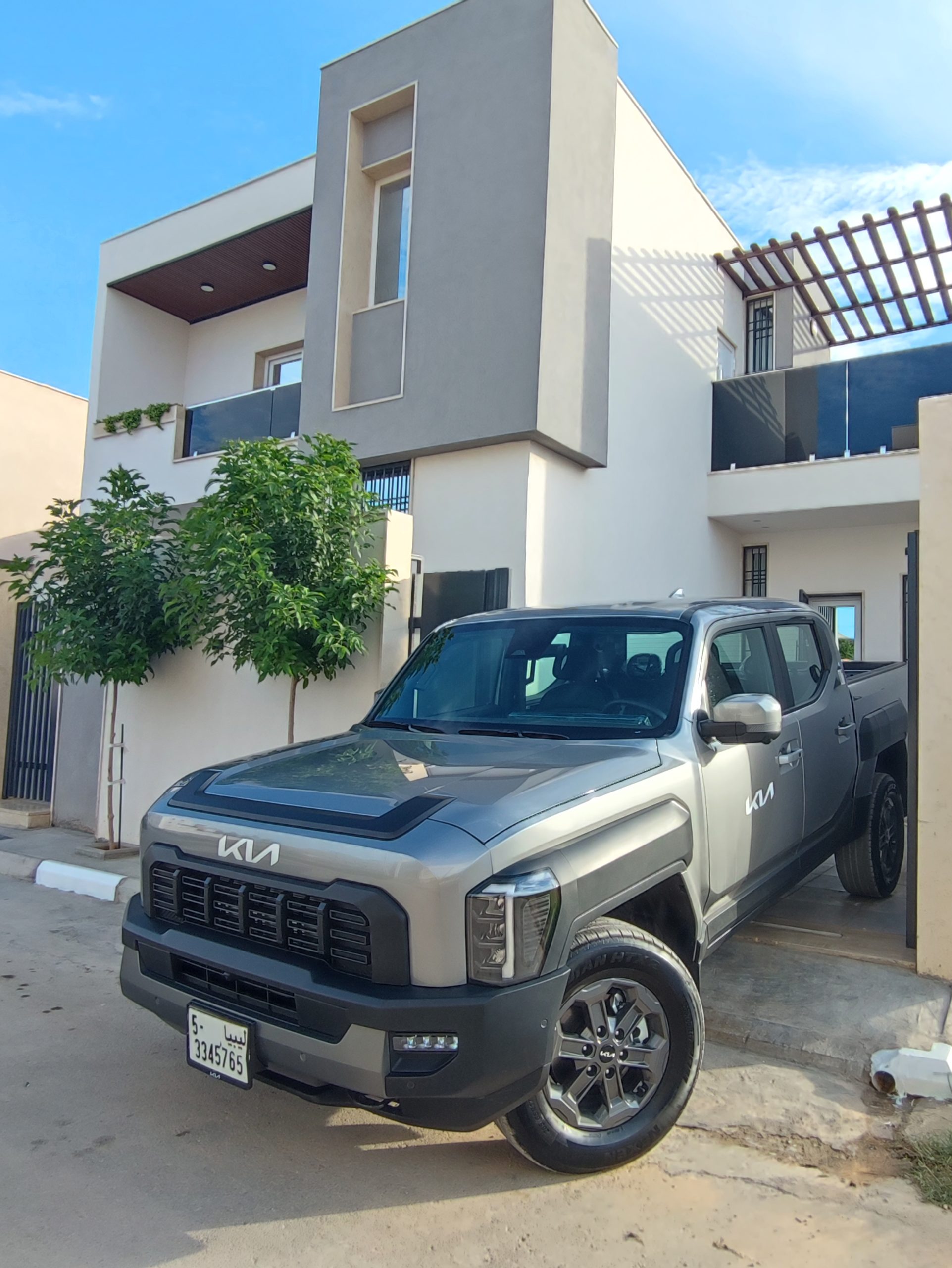
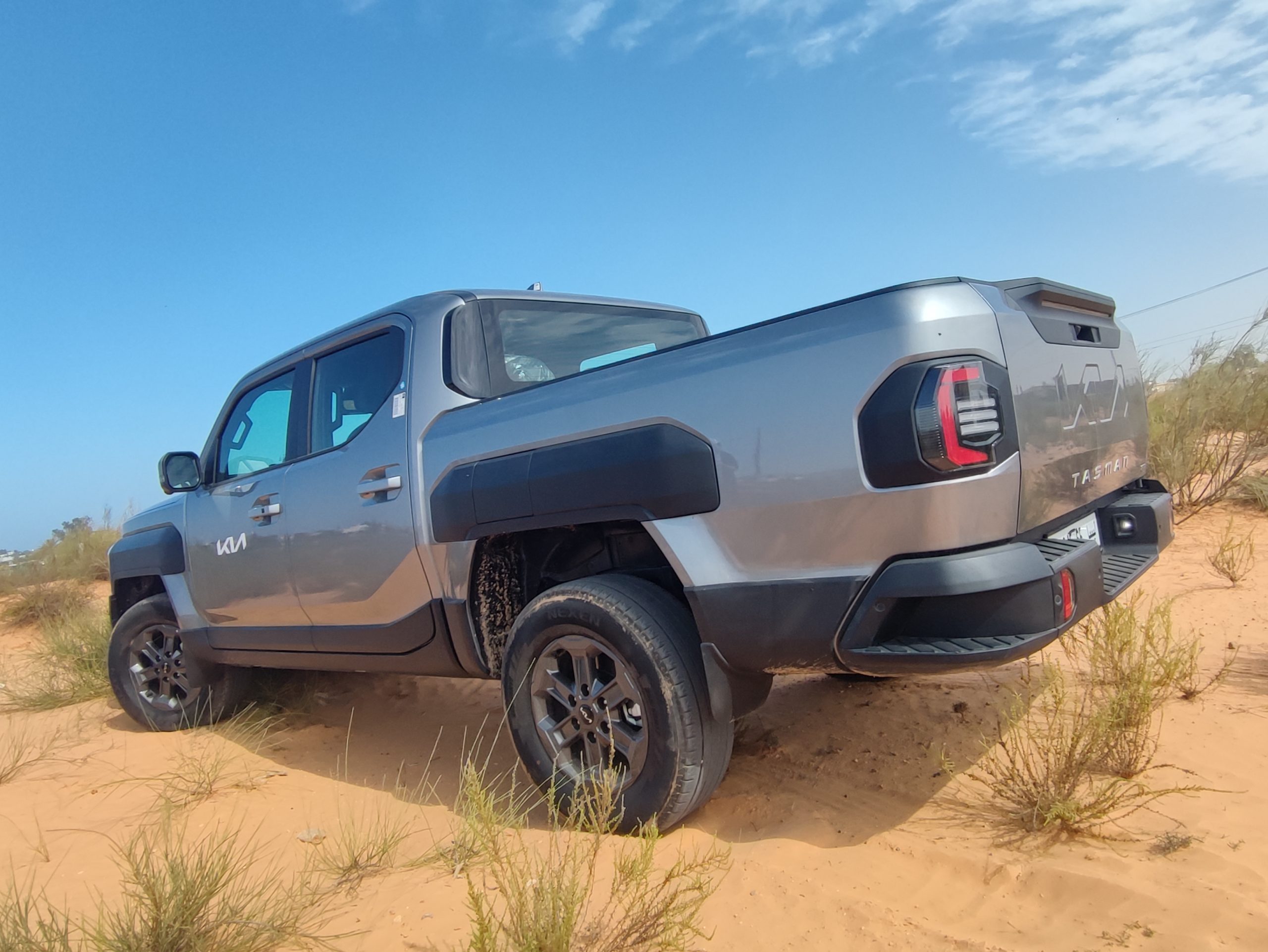
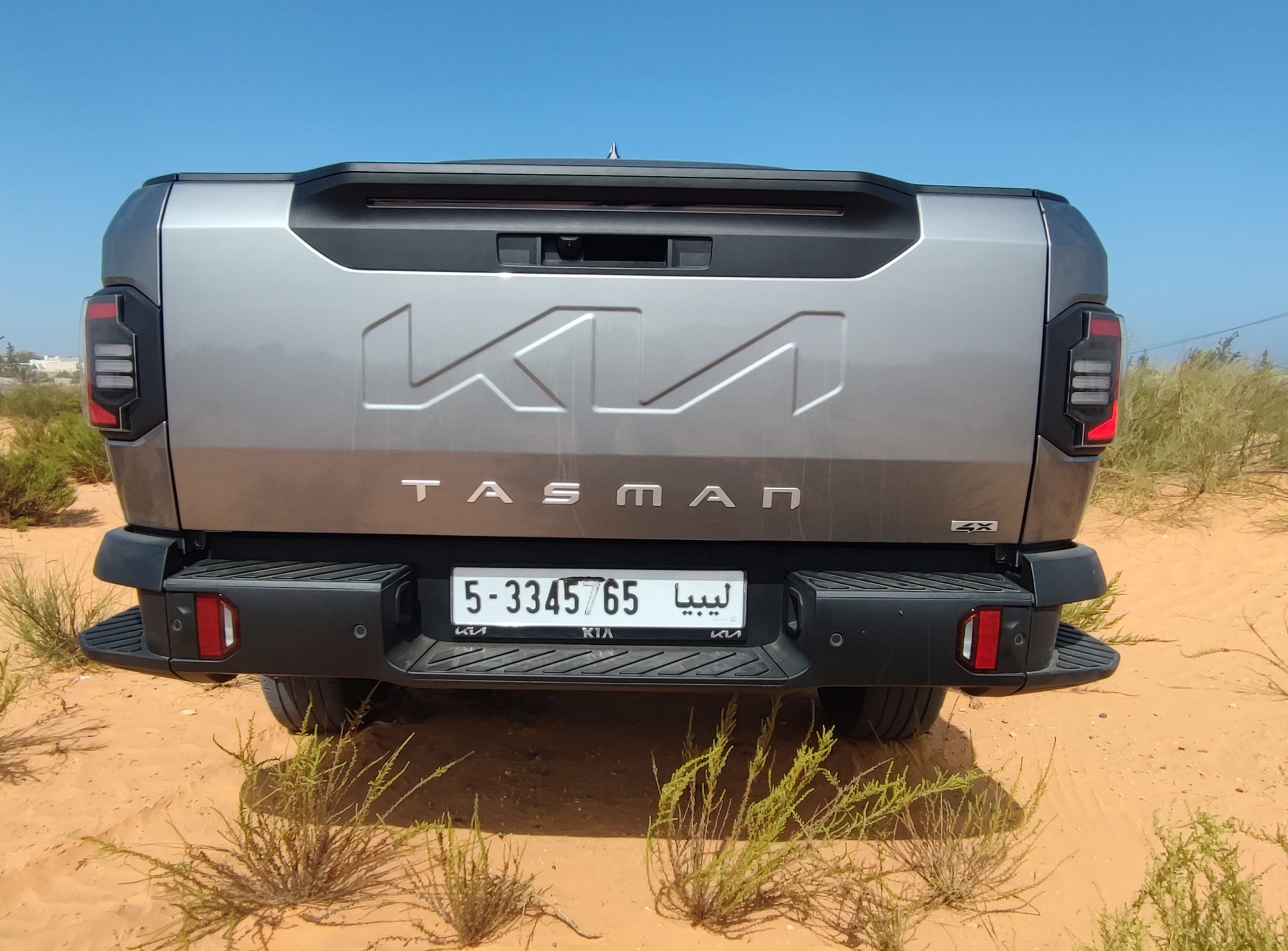
Perhaps the most striking feature of the Tasman is its front-end design, which is particularly unusual and lacks the smooth, flowing lines typically associated with vehicle styling. However, this was a deliberate choice by Kia’s designers, who wanted to create a vehicle with muscular, military-inspired styling while giving it a distinctive identity of its own.
This approach is certain to attract attention and make the Tasman stand out on the road. The effect is reinforced by the truck’s boxy design at both the front and rear, softened by a few rounded details, particularly around the headlights. This styling reflects a broader contemporary trend among several global automakers.
Exceptional Dimensions Inside and Out
The Tasman offers generous exterior dimensions and a spacious passenger cabin, both of which contribute significantly to comfort and practicality in everyday driving and operation.
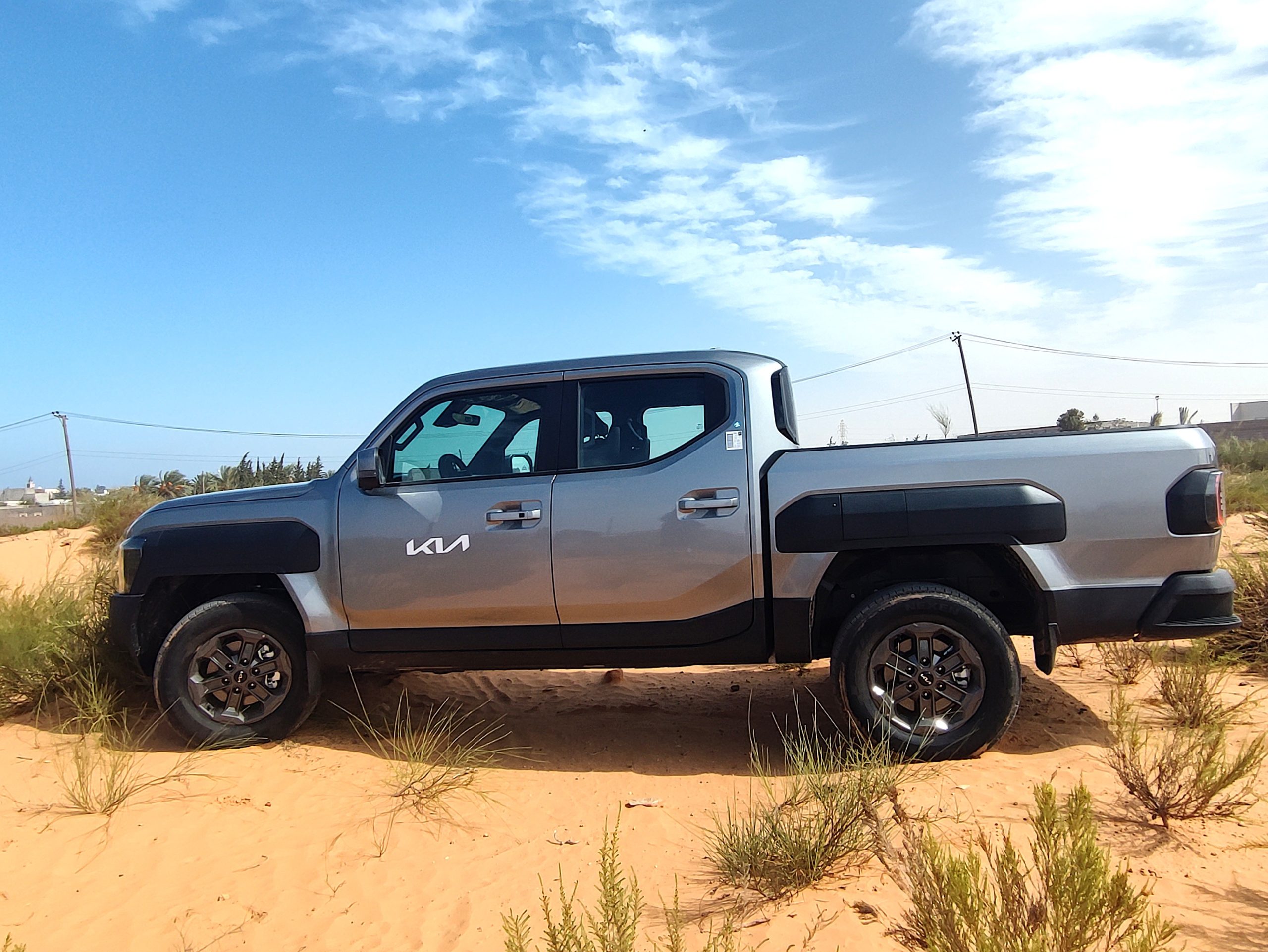
The vehicle features impressive ground clearance of up to 252 mm. It measures 5,140 mm in overall length, 1,930 mm in width and up to 1,920 mm in height. Its 3,720 mm wheelbase ultimately translates into a remarkably spacious cabin, benefiting not only front-seat occupants but rear passengers as well.
Meanwhile, the rear cargo bed can accommodate a payload of up to one tonne, and the vehicle can tow loads of up to 3.5 tonnes, thanks to its powerful engine and robust chassis.
Advanced Features for Its Class
With an extensive list of equipment, the Kia Tasman’s cabin offers a premium level of comfort and sophistication for its segment.
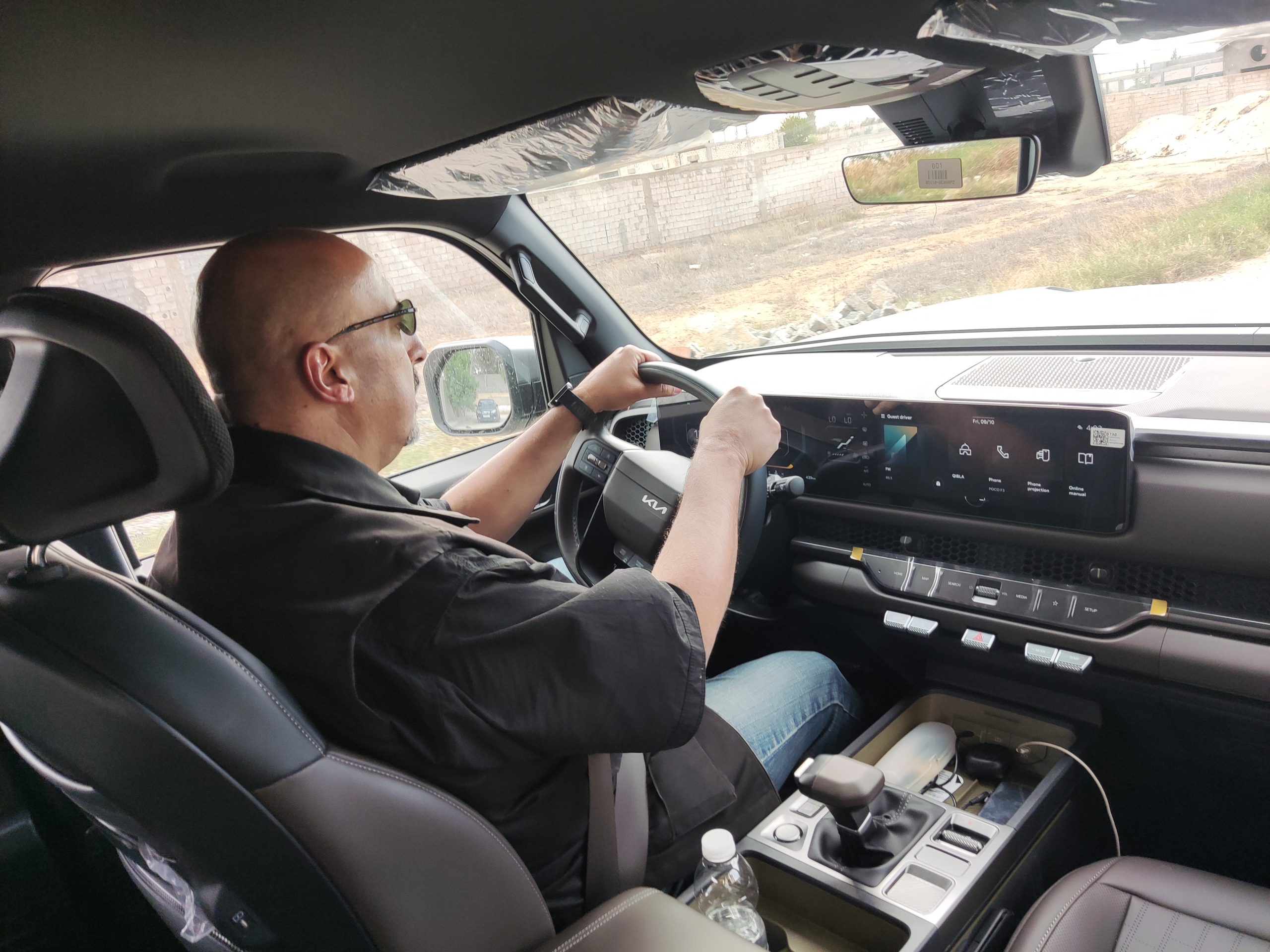
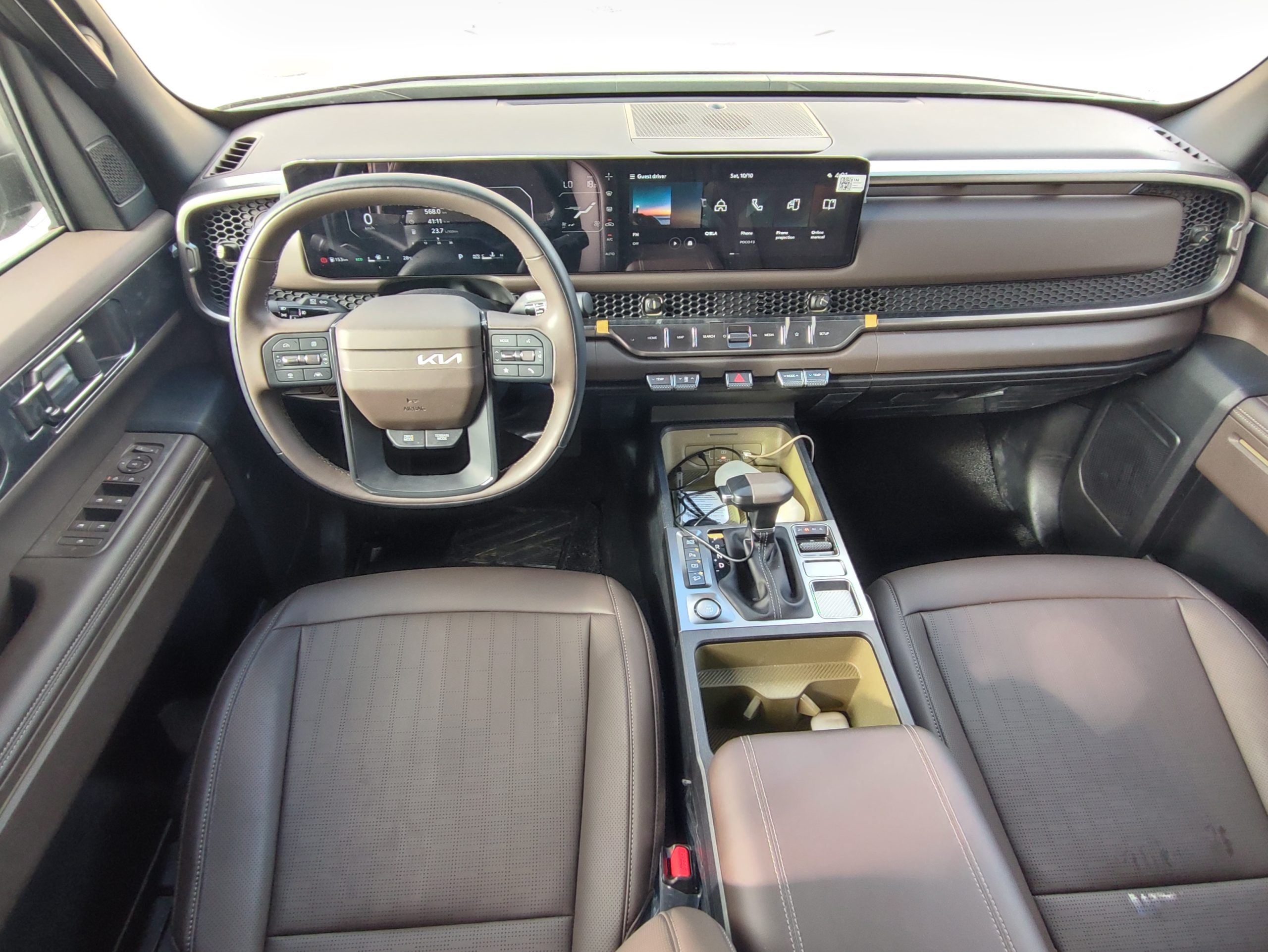
The interior features leather upholstery with prominent stitching that enhances the overall design quality, complemented by high-quality plastic trim across the dashboard and centre console.
The central infotainment display integrates seamlessly with the driver’s instrument display, forming an impressive combined screen measuring 24.6 inches in total (12.3 + 12.3 inches). The system provides a wealth of entertainment and driving information, alongside a 360-degree surround-view camera system. It also supports both Android Auto and Apple CarPlay.
The multifunction steering wheel further enhances the driver’s interaction with the vehicle under different road conditions. Particularly useful are the Drive Mode buttons, which provide four driving modes: Normal, Eco, Smart and Sport.
In addition, a dedicated Terrain Mode button allows drivers to select the appropriate setting for different surfaces encountered during four-wheel-drive operation, including rocky, sandy, snowy and muddy terrain.
Kia has also prioritised passenger comfort, ensuring that the Tasman’s seats remain comfortable even on long journeys. The cabin features numerous storage compartments for personal belongings, located in the doors, dashboard and even beneath the rear seats. Multiple USB-C ports are also provided, allowing all occupants to connect and charge their electronic devices.
Other highlights include a high-performance climate-control system with distinctively designed air vents, as well as an advanced audio system. We would, however, have liked to see the Harman Kardon premium sound system fitted as standard to the entry-level Tasman variant we tested, rather than reserving it for higher-specification versions.
Standard Safety Features
The Kia Tasman has received a five-star safety rating from the Australasian New Car Assessment Program (ANCAP), alongside a comprehensive suite of passive and active safety systems.
Airbags
- Dual front airbags.
- Side airbags for chest protection.
- Side curtain airbags for head protection.
- A front-centre airbag.
Braking and Stability Systems
- Anti-lock Braking System (ABS).
- Electronic Brakeforce Distribution (EBD).
- Brake Assist (BA).
- Electronic Stability Control (ESC).
- Vehicle Stability Management.
- Hill-start Assist Control.
- Downhill Brake Control.
- Multi-Collision Braking.
Towing and Control Systems
- Integrated trailer brake controller.
- Trailer Stability Assist (TSA).
Advanced Driver-Assistance Systems (ADAS)
- Autonomous Emergency Braking (AEB) with Forward Collision Warning.
- Lane Keeping Assist (LKA), Lane Departure Warning (LDW) and Emergency Lane Keeping (ELK).
- Blind-Spot Collision-Avoidance Assist (BCA).
- Rear Cross-Traffic Collision-Avoidance Assist (RCCA) and Rear Cross-Traffic Alert (RCTA).
- Driver Attention Warning (DAW).
Parking and Monitoring
- Front and rear parking sensors, with information displayed on the screen.
- A rear-view camera with dynamic guidelines.
Child Safety
- ISOFIX child-seat anchor points.
Performance and Engine
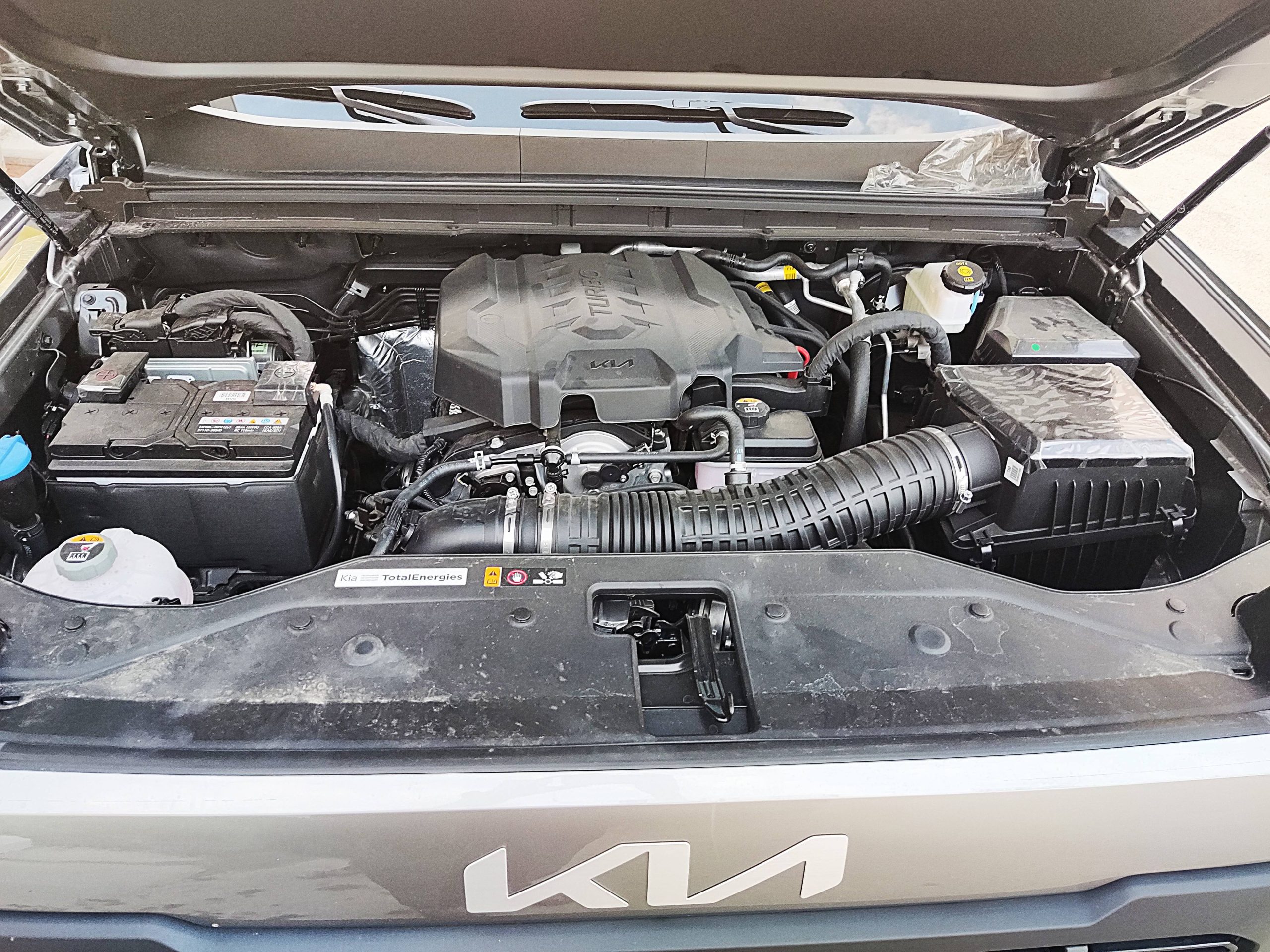
The Tasman is powered by a fuel-efficient yet high-performance 2.5-litre, four-cylinder turbocharged GDI petrol engine, producing 280 horsepower and 421 Nm of torque.
The engine is paired with an eight-speed automatic transmission supplied by the renowned manufacturer ZF. The vehicle accelerates from 0 to 100 km/h in approximately 10.5 seconds, while its top speed approaches 200 km/h. The fuel tank has a capacity of 80 litres.
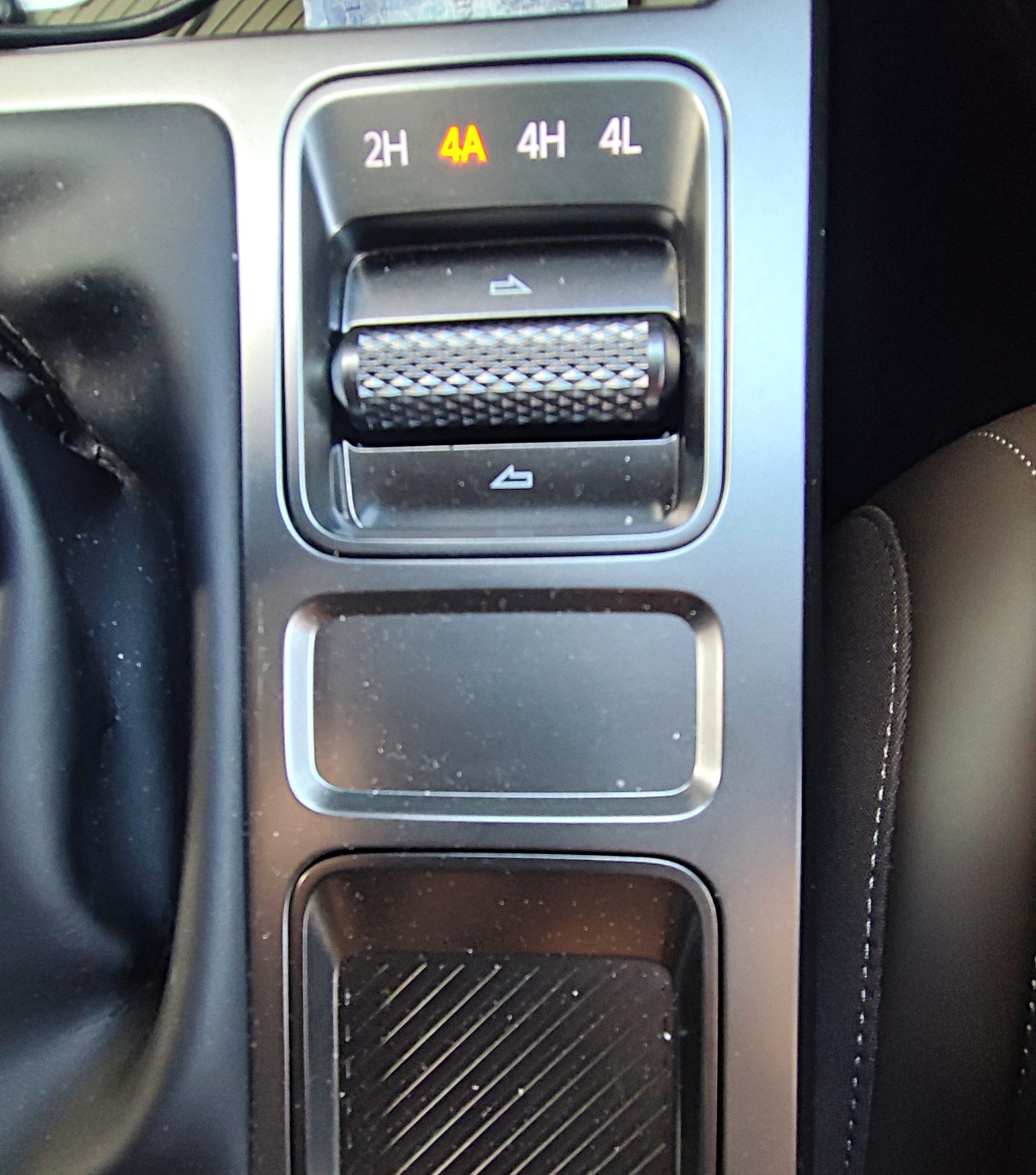
The vehicle also features an intelligent, selectable four-wheel-drive system offering four drive modes: 2H, A4, 4H and 4L, controlled via four buttons on the centre console.
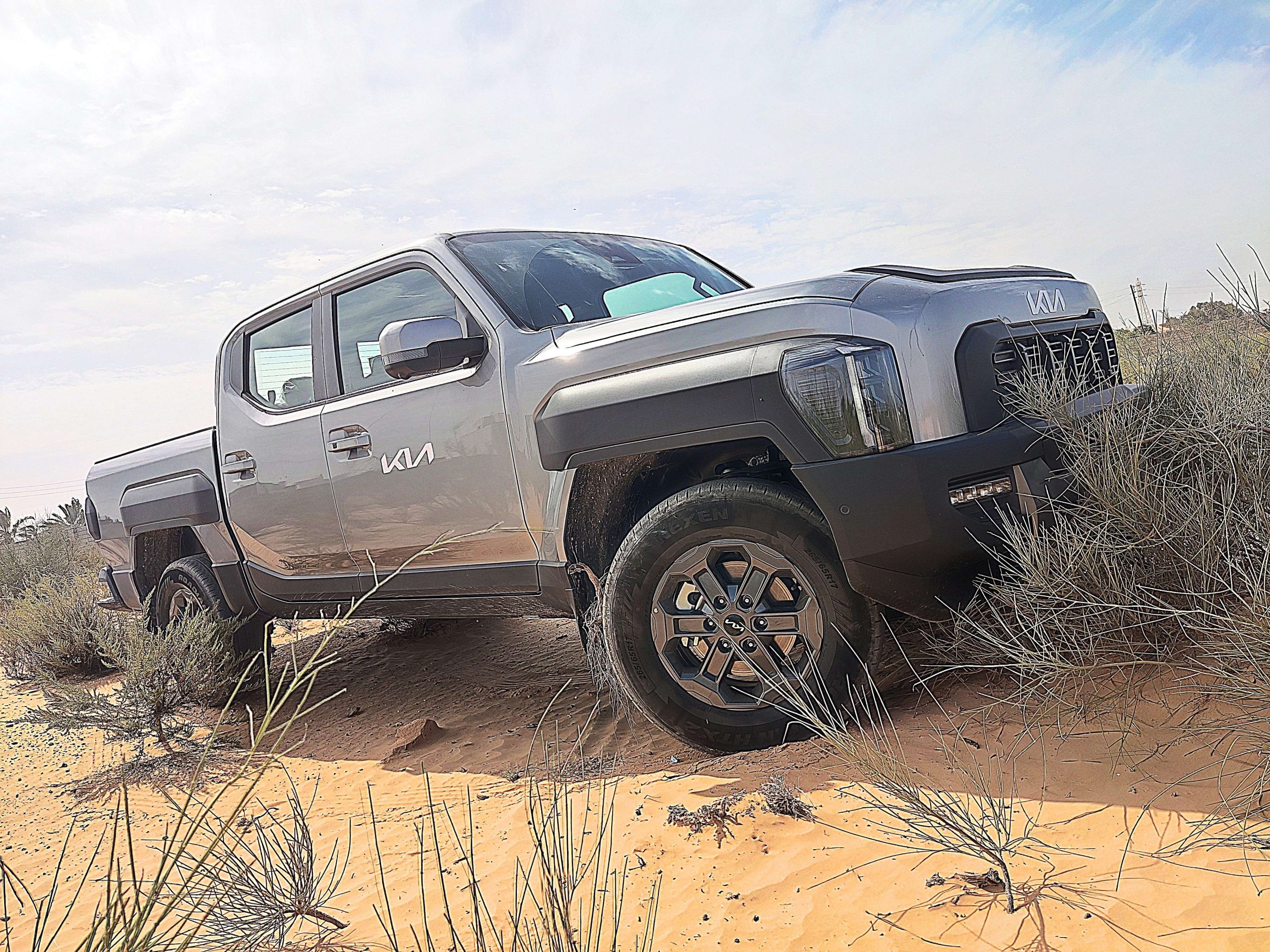
Beyond its strong performance on paved roads and its manoeuvrability, the Tasman demonstrated impressive off-road capabilities, particularly on desert tracks and soft sand.
One of our main observations, however, was its relatively high fuel consumption, especially when using the automatic A4 four-wheel-drive mode. Fuel consumption decreased when driving in two-wheel-drive mode (2H) and when selecting the fuel-saving Eco mode.
Overall Impressions
There is no doubt that driving the Kia Tasman offers a distinctive experience, particularly because the model has not yet become widespread in the Libyan market. This is evident from the attention it attracts from passers-by wherever it goes.
Its competitors in the local market include the more widely established Dodge Ram and Toyota Tundra, both of which are relatively larger vehicles.
The driving experience is one of the Tasman’s strongest selling points. Whether it is the unexpectedly strong performance delivered by its engine relative to its displacement, the ease with which it can be manoeuvred despite its relatively large dimensions, or the comfortable seating and extensive equipment—even in the entry-level variant we tested—the Tasman makes a compelling impression.
Ultimately, nothing speaks more clearly about the Kia Tasman than the hands-on driving experience itself and the impression it leaves on the driver and passengers alike.
5- أداء عالى خارج الطرق الممهدة
2- أربعة أنظمة للدفع
4- قدرات عالية بالكثبان الرملية
6- خطوط خلفية للصندوق الخلفى بتوقيع كــيا
7- محرك GDI بقدرة أداء عالية
8- لوحة قيادة ووضعية جلوس متطورة فى هذه الفئة
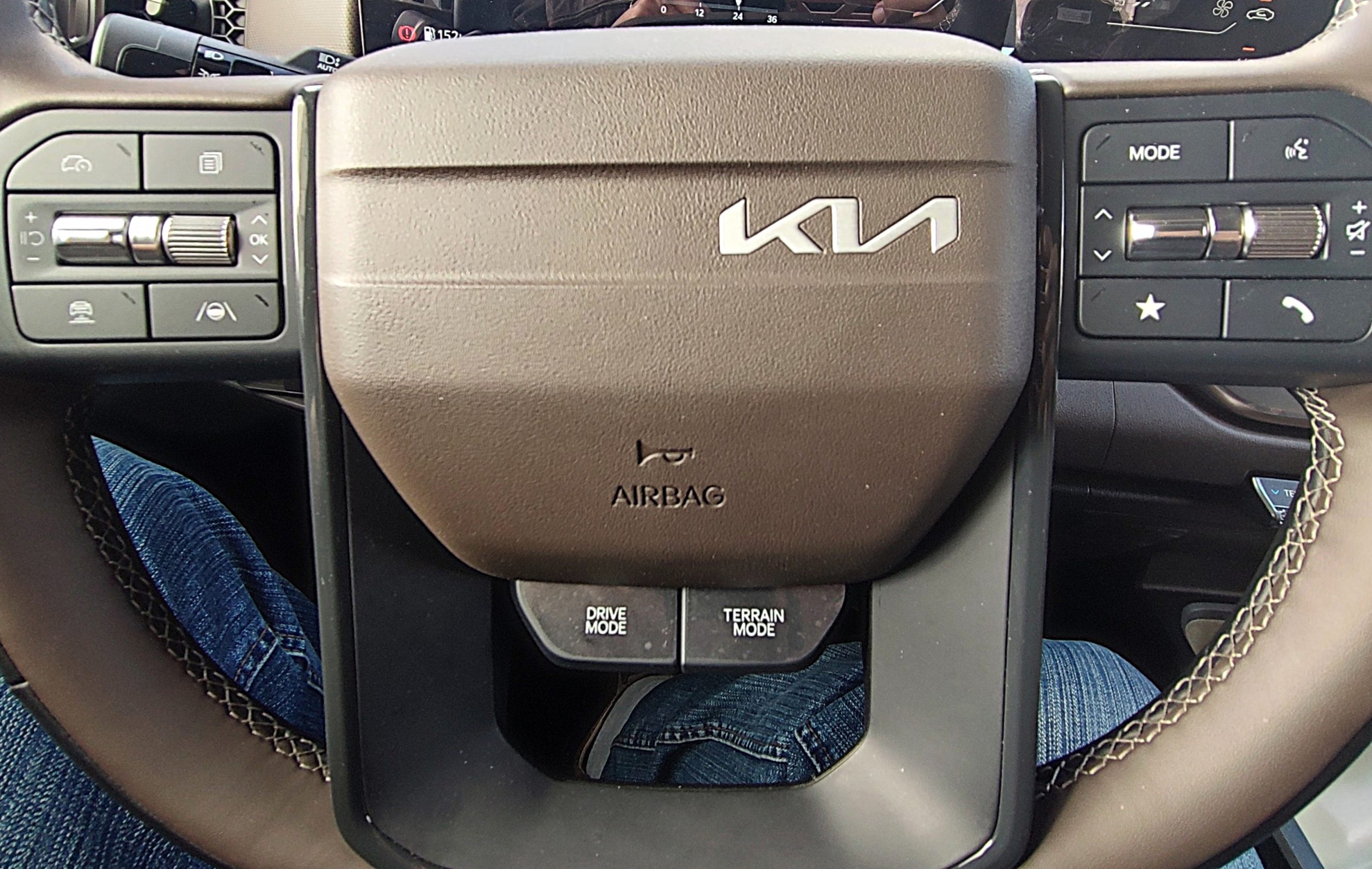
9- إختيار نوعية الطريق والقيادة من خلال أزرة بعجلة القيادة
Recent Comments