
Toyota Launches the All-Electric Hilux Pickup (BEV)
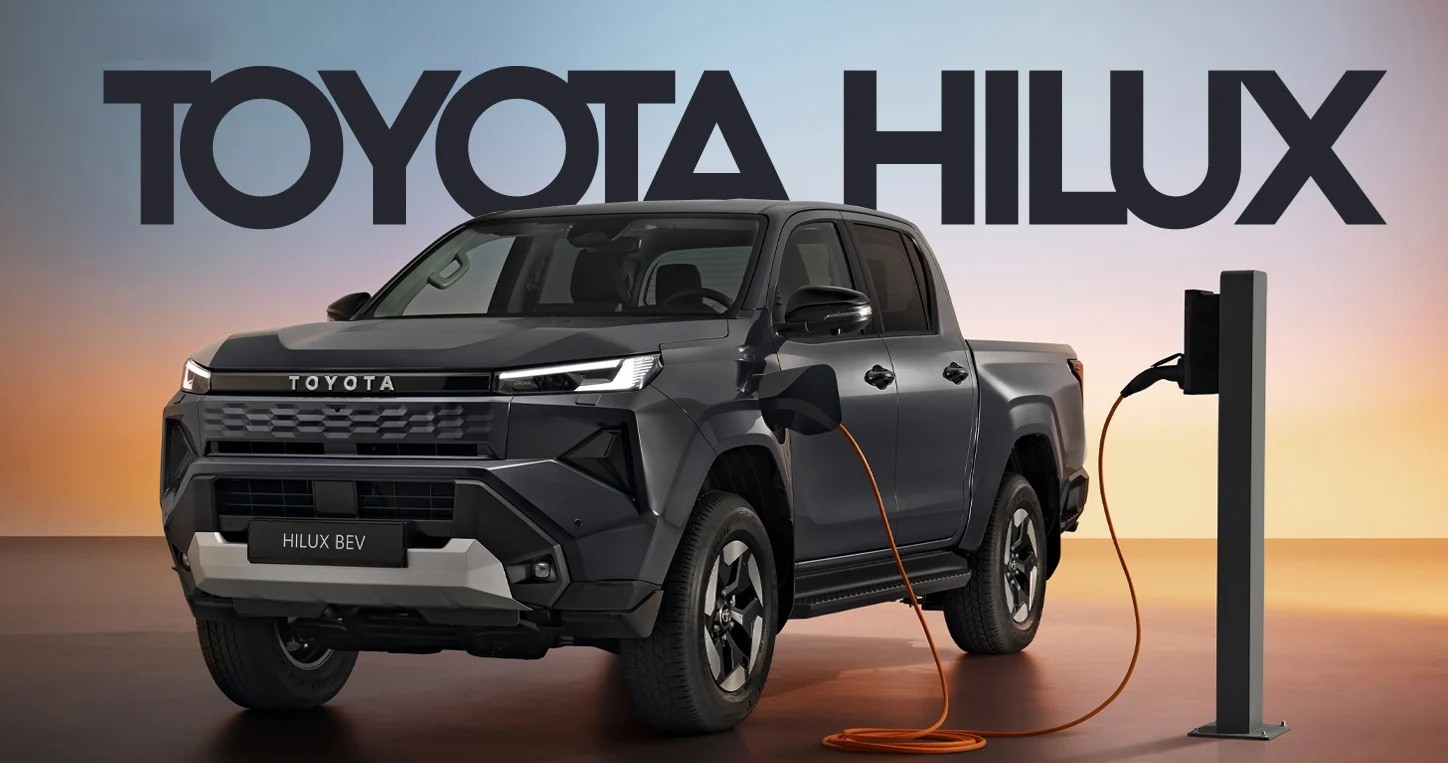
As part of Toyota’s global model development plans, the renowned Japanese automaker has recently launched an all-electric version of one of its most iconic pickup trucks, the Toyota Hilux (Toyota Hilux BEV). The electric powertrain makes driving on roads smoother and more comfortable while preserving the vehicle’s exceptional off-road capabilities. It is also an ideal option for businesses seeking to reduce emissions from their vehicle fleets.
The word “iconic” may be one of the terms Toyota’s public relations department uses to describe the Hilux pickup, particularly after global Hilux sales surpassed 27 million units. The latest model belongs to the ninth generation. Toyota expects the new electric Hilux to appeal to businesses operating in sectors such as forestry and fixed-site operations, which also need to reduce emissions from their vehicle fleets.
Design and Engineering
The Toyota Hilux BEV is available exclusively in a five-seat Double Cab configuration, in response to market demand, although a two-seat cab conversion option is expected to become available soon.
The Icon version has a maximum payload of approximately 715 kg, while the Invincible version can carry 710 kg. The vehicle measures 5,320 mm in overall length, with a load bed measuring 1,555 mm long and 1,540 mm wide. Its braked trailer towing capacity is 1,600 kg.
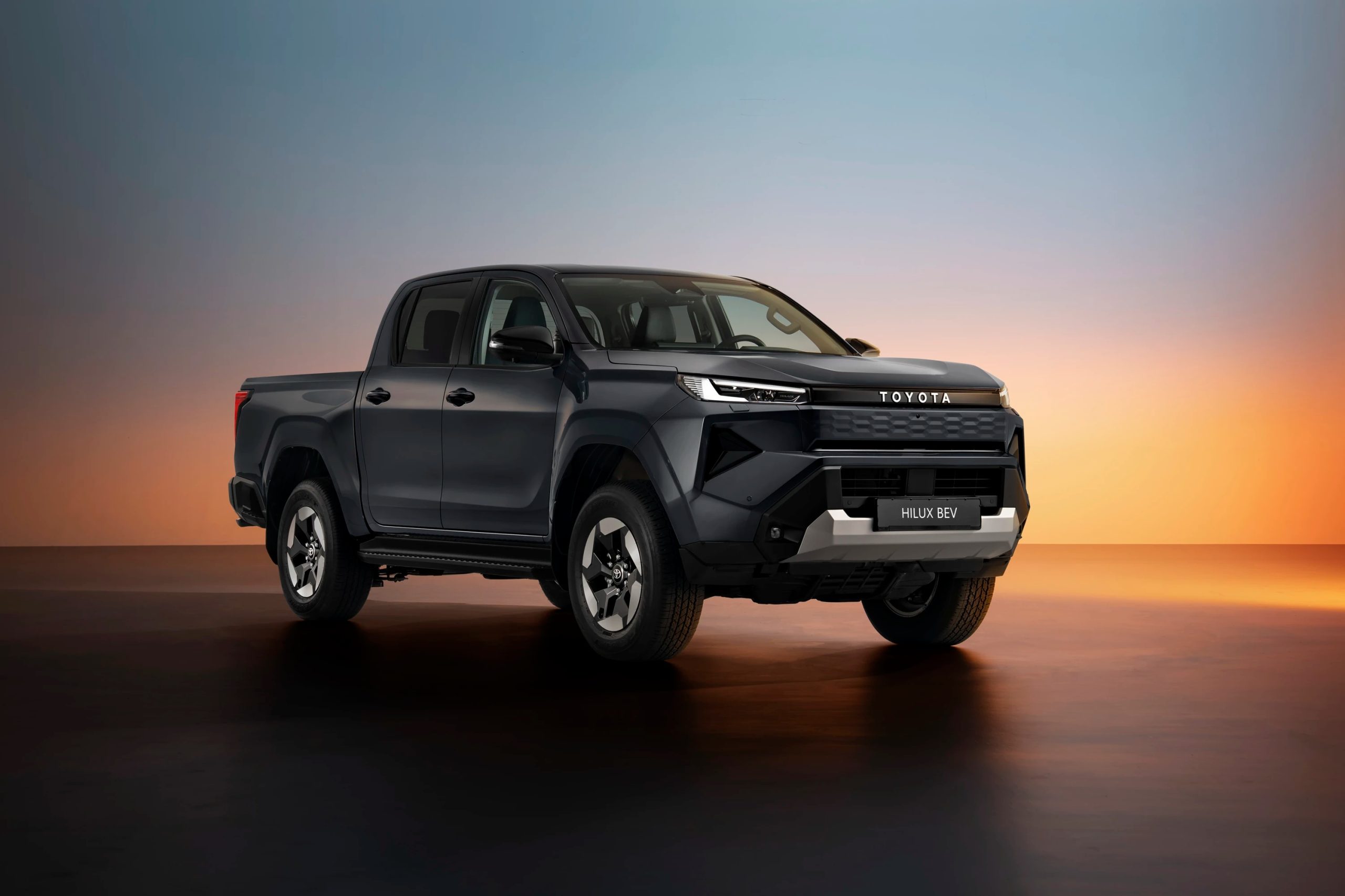
The Hilux BEV is Toyota’s first all-electric vehicle to use a separate body-on-frame chassis. Its exterior has received several updates, with the redesigned front end giving the truck a noticeably taller appearance. At the rear, new side steps have been added, and the rear step has been redesigned to make access to the load bed easier.
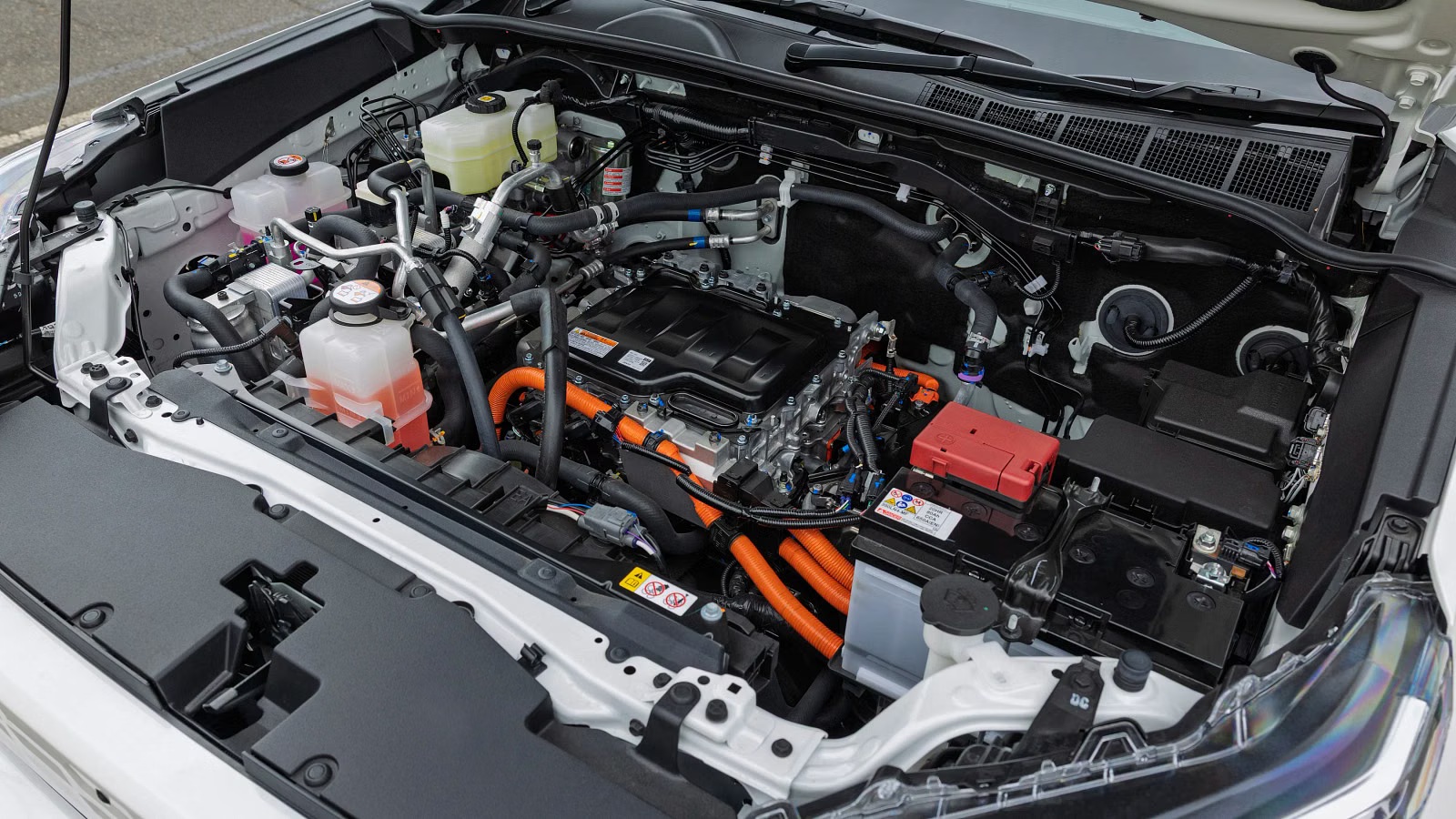
The Hilux BEV features a new lithium-ion battery with a total capacity of 59.2 kWh and a usable capacity of 54 kWh. It also employs two electric drive units, one at the front and one at the rear, providing a permanent all-wheel-drive system.
The front motor produces 80 kW and 205 Nm of torque, while the rear motor delivers 128 kW and 268 Nm (equivalent to 193 hp according to the source figures: 110 hp at the front and 173 hp at the rear). The battery is protected by a robust underbody cover, while a new subframe prevents twisting forces encountered on rough and challenging terrain from affecting it.
A new solid De Dion rear axle, equipped with leaf springs, accommodates the electric drive unit without exposing it to damage or compromising the pickup’s ability to tackle extremely rough terrain.
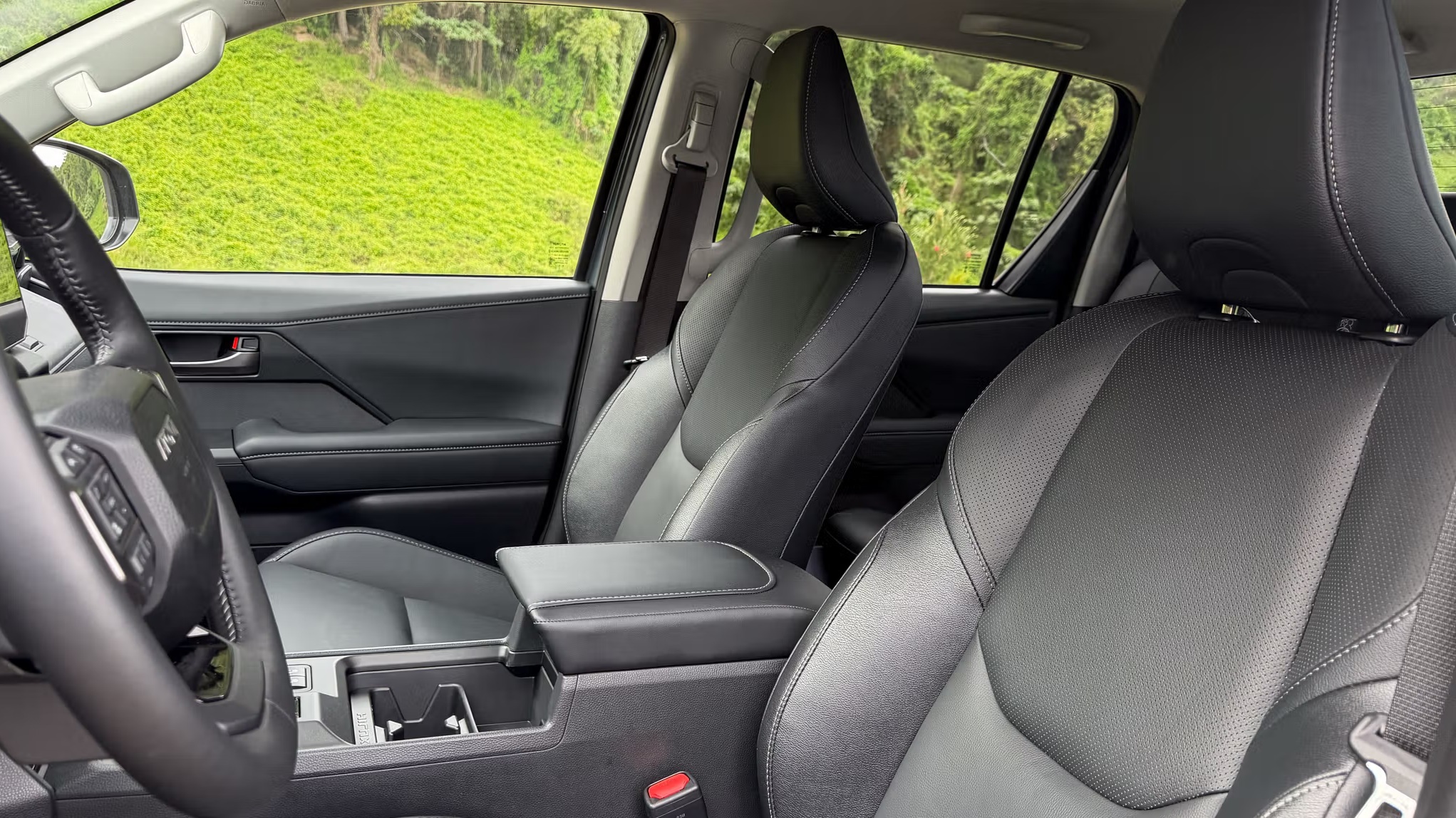
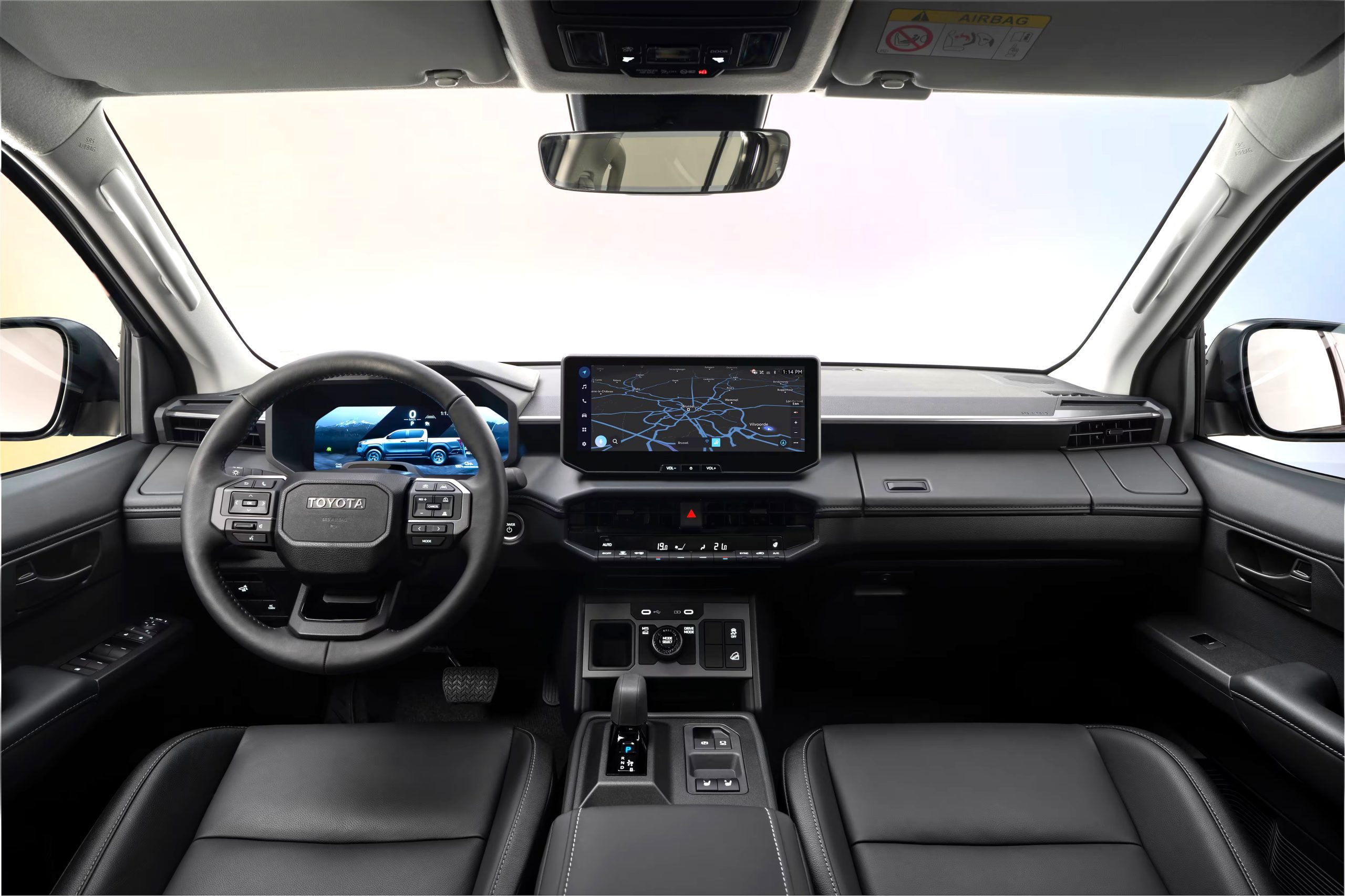
The interior of the Double Cab has been completely redesigned, with improvements to material quality and finishes inspired by the cabin of the new Toyota Land Cruiser. It even includes a cooled storage compartment in the Invincible and Invincible X versions.
Despite the raised bonnet, there is no front storage compartment, meaning drivers must find space inside the vehicle for the large charging bag containing the charging cables.
Driving the Toyota Hilux BEV
The Hilux BEV is quiet, smooth and easy to drive on ordinary roads. In other words, it outperforms the diesel version in this respect. Ride quality is generally comfortable, thanks to the tyres’ tall sidewalls, although the vehicle can become slightly unsettled on certain road surfaces.
Performance is also impressive for a pickup weighing around 2.5 tonnes. The instant availability of torque helps it accelerate from 0 to 62 mph (100 km/h) in 9 seconds, with a top speed of 140 km/h. For the first time, the Hilux features electric power steering, providing a more direct response. It also has a conventional gear selector on the centre console.
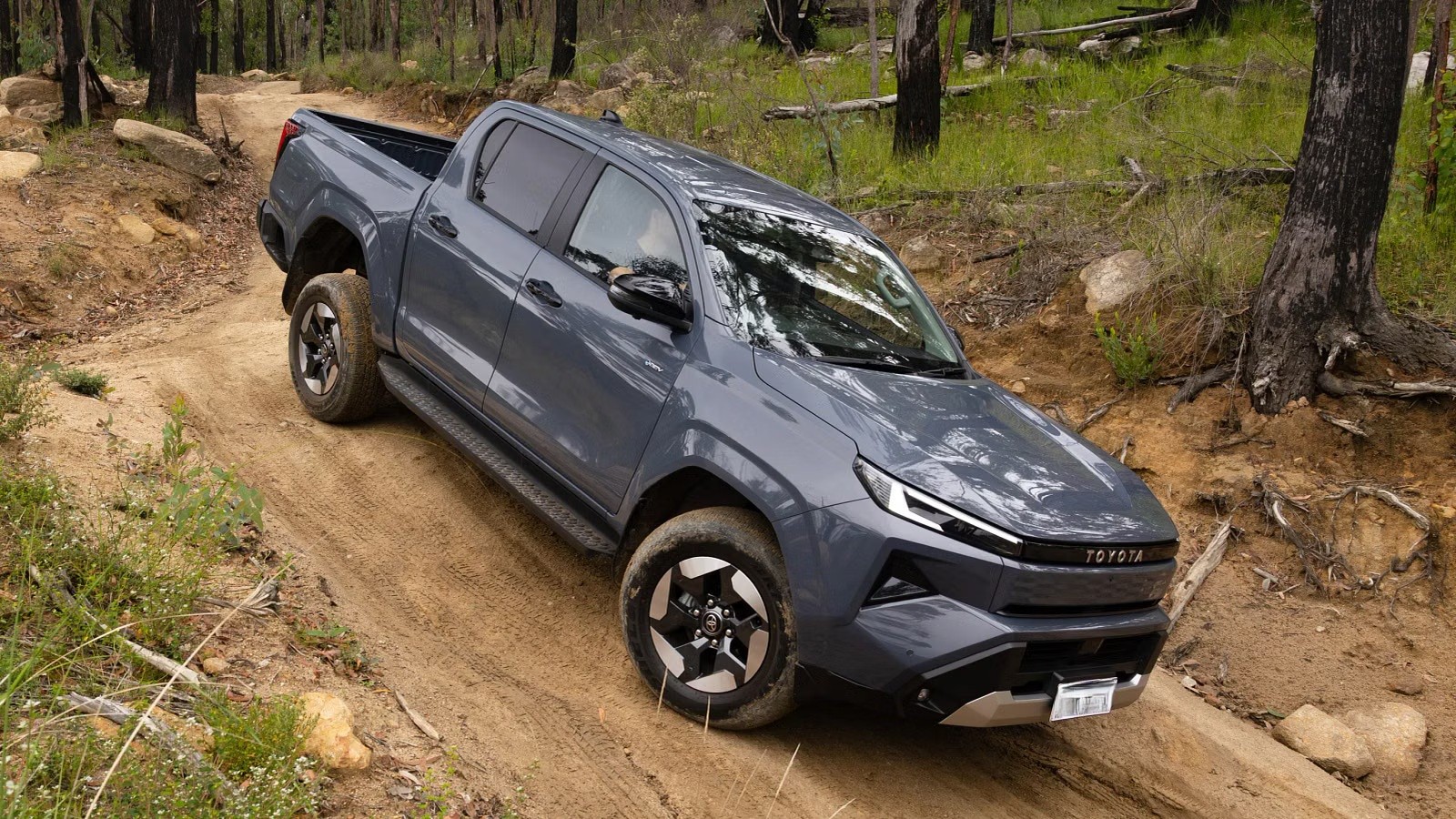
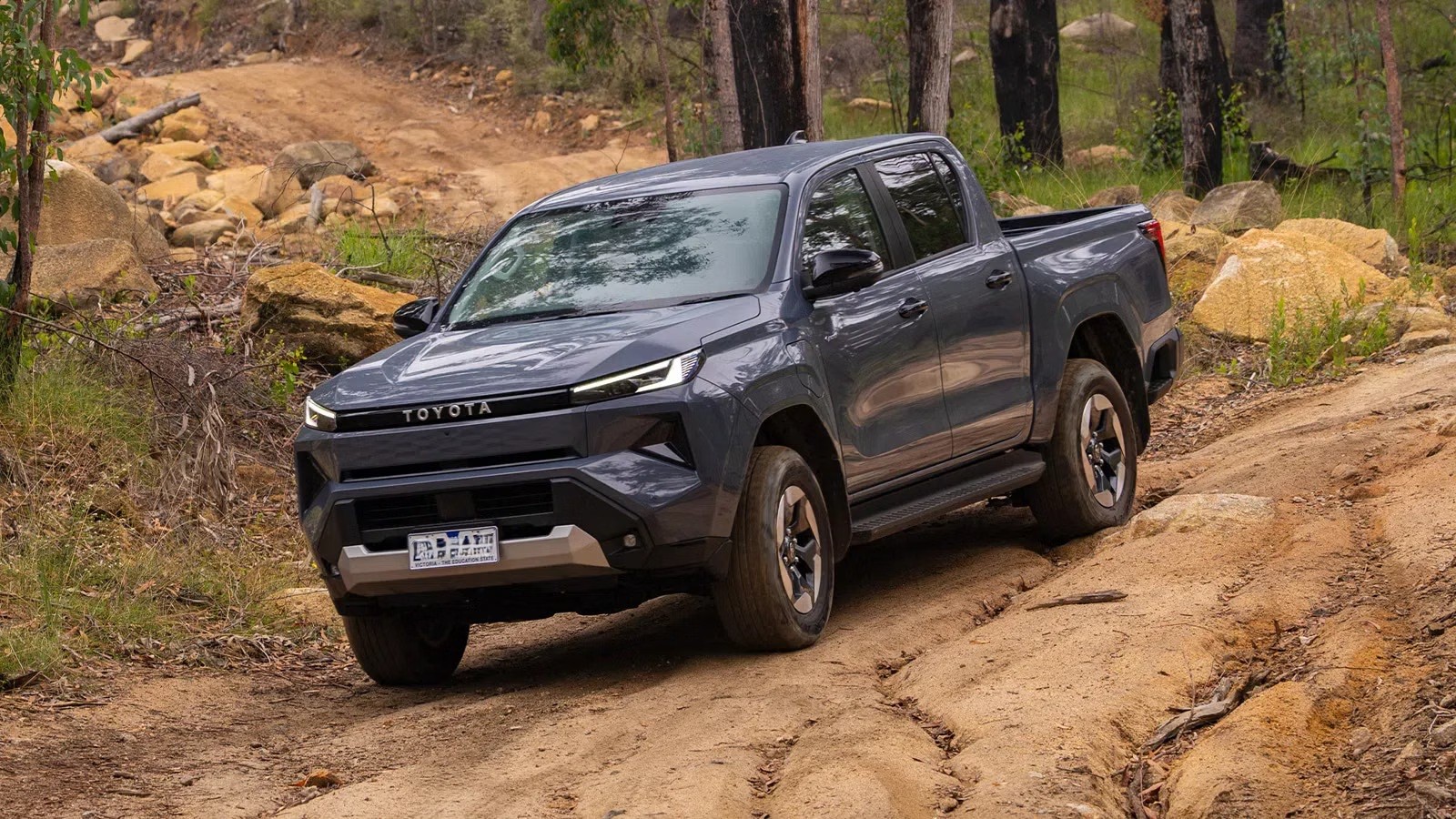
The Hilux was designed primarily for off-road use, so we tested its capabilities on one of the toughest four-wheel-drive trails in North Wales. The route features steep climbs and descents over rocks, as well as a variety of challenges involving mud and deep water. The Hilux made it to the top of the mountain and back down without any significant problems, operating in complete silence and producing no tailpipe emissions while maintaining a comfortable ride.
Its outstanding off-road capabilities are attributable to several factors, including 212 mm of ground clearance and a 20-degree breakover angle. Both figures are slightly lower than those of the diesel version because the battery is mounted beneath the vehicle’s floor.
Other specifications include a 29-degree approach angle, a 24-degree departure angle, 500 mm of vertical wheel articulation and a wading depth of up to 700 mm—the same as the diesel Hilux.
The permanent all-wheel-drive system can distribute 100% of the available torque to either the front axle or the rear axle. The electric powertrain also provides more precise control than the diesel engine.
In addition to its specialised four-wheel-drive engineering, Bridgestone Dueler off-road tyres play an important role in enhancing the Hilux BEV’s capabilities.
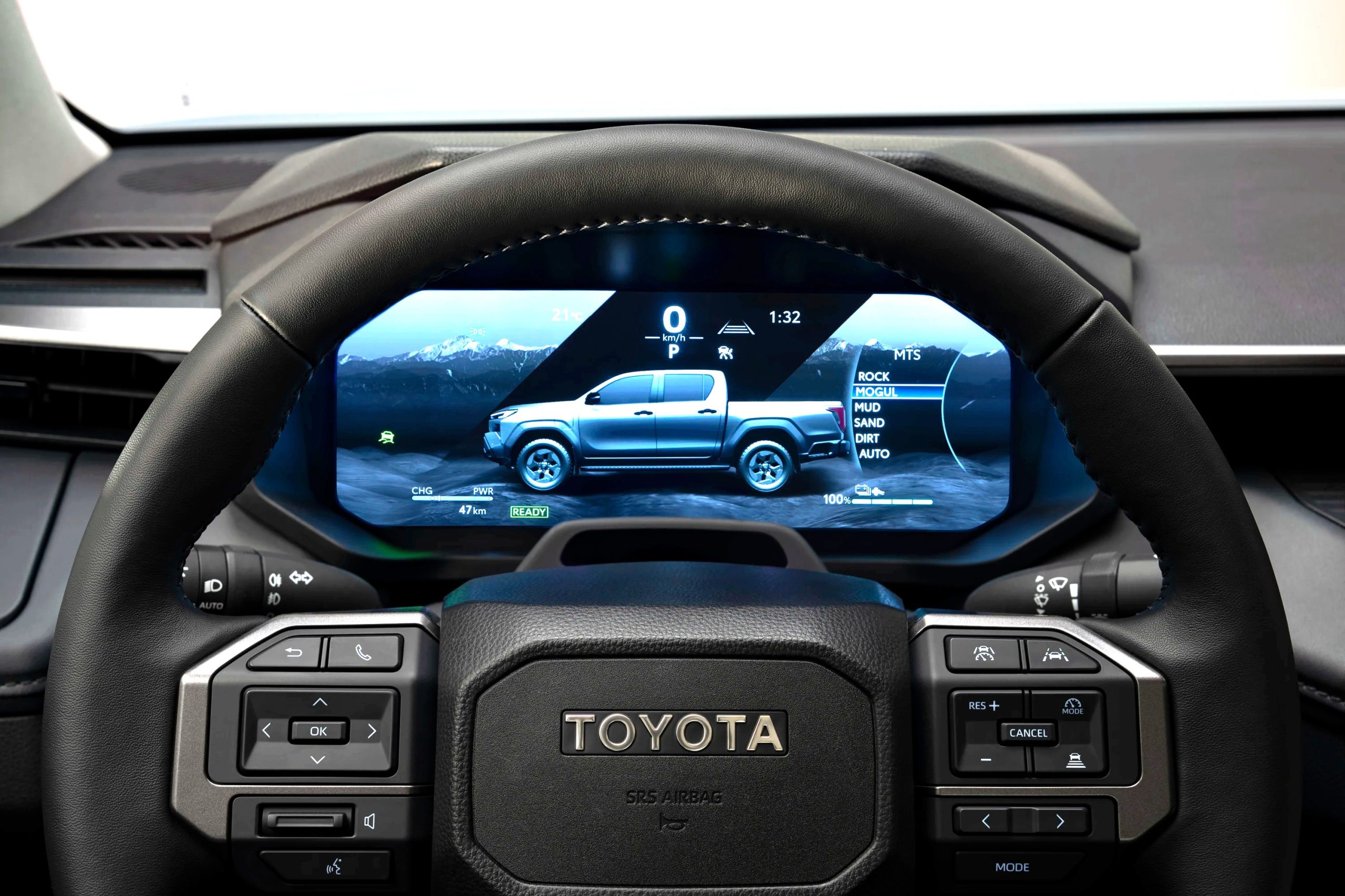
On regular roads, drivers can choose between Sport, Normal and Eco driving modes. For off-road driving, the Hilux introduces Toyota’s Multi-Terrain Select (MTS) system for the first time in an all-electric vehicle.
The system offers different modes for tackling rocks, sand, mud, dirt and uneven, rutted terrain, as well as an automatic mode. These settings are being introduced for the first time in a battery-electric vehicle.
The driving modes adjust torque distribution to simulate the effect of using a low-range gearbox for off-road driving. Both the driving modes and the MTS system can be selected using physical buttons positioned at the bottom of the centre console. Above the driving-mode controls are physical buttons for operating the climate-control functions, topped by a 12.3-inch touchscreen.
The infotainment system and its graphics do not appear as modern, smooth or high-resolution as those found in most newer electric vehicles.
However, one of the biggest frustrations for Hilux BEV drivers may be the difficulty of easily disabling the driver-assistance systems that issue annoying audible alerts through the touchscreen. Instead, drivers must use the steering-wheel controls to access the advanced driver-assistance systems (ADAS) settings—such as lane-departure warnings and driver-attention monitoring—through the instrument display in front of them. This is an impractical procedure, particularly while driving.
Electric Driving Range and Charging
According to the WLTP test cycle, the Toyota Hilux BEV Invincible Double Cab has an average electric driving range of approximately 150 miles (241 km). Many people may consider this range insufficient. However, for vehicles that operate throughout the day at a single site before returning to the company depot to recharge overnight, it could be adequate for many organisations.
The official WLTP urban driving range is approximately 236 miles (380 km).
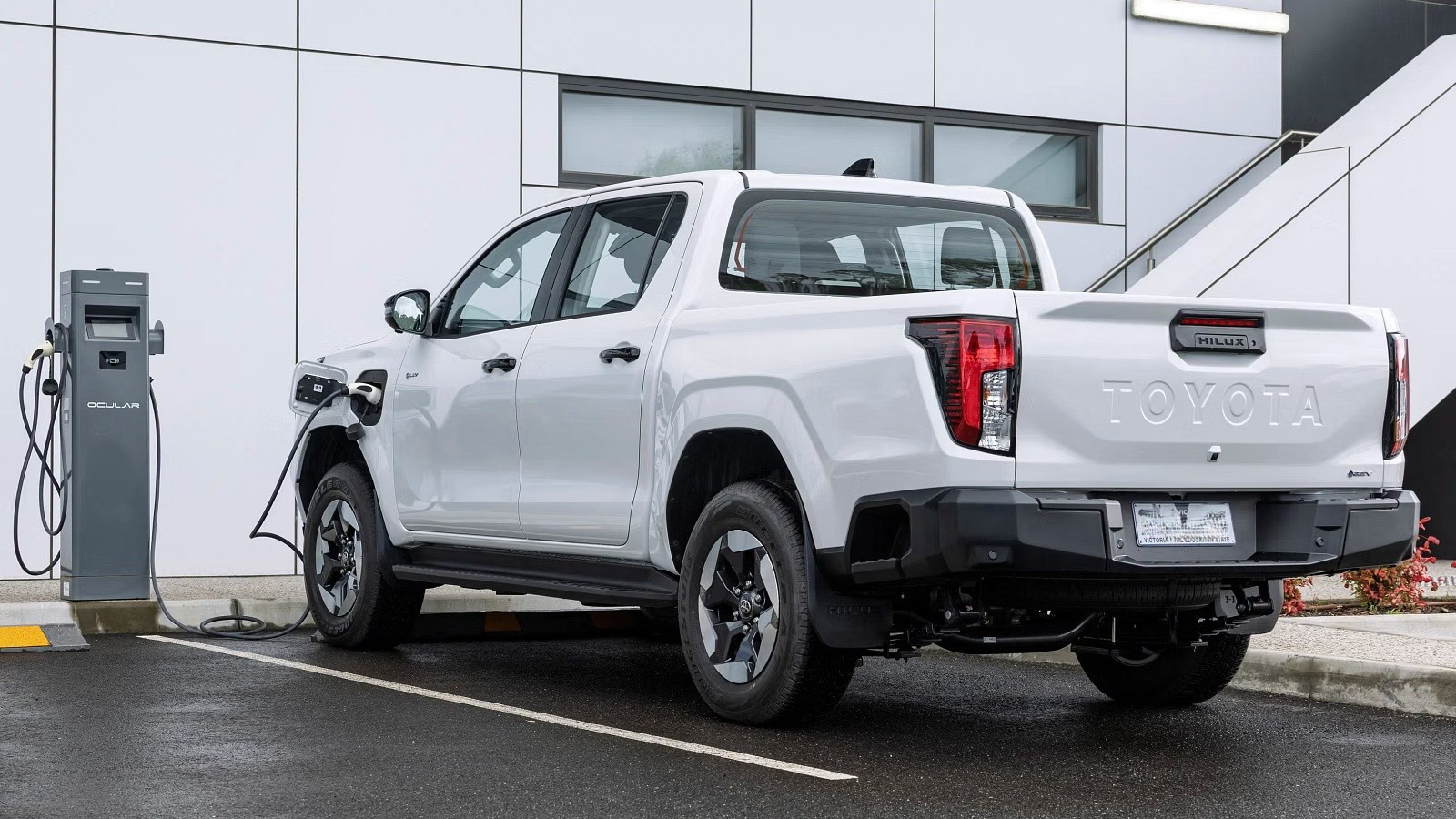
The Hilux BEV supports DC fast charging at a maximum power of 125 kW, which should allow the battery to charge from 10% to 80% in 30 minutes. AC charging at up to 10 kW, using a home charger or a public wall-mounted charging unit, for example, allows the battery to charge from 10% to 100% in approximately 6.5 hours.
In addition to the difficulty of easily disabling the driver-assistance systems, another area that could be improved is the provision of clearer and more comprehensive information about battery status during charging.
Toyota also offers warranties of up to 10 years or 100,000 miles, while its BEV Battery Care programme guarantees battery performance for up to 10 years or one million miles.
1
3
4
5
Hilux BEV 2
Hilux BEV 3
Hilux BEV 4
Recent Comments