
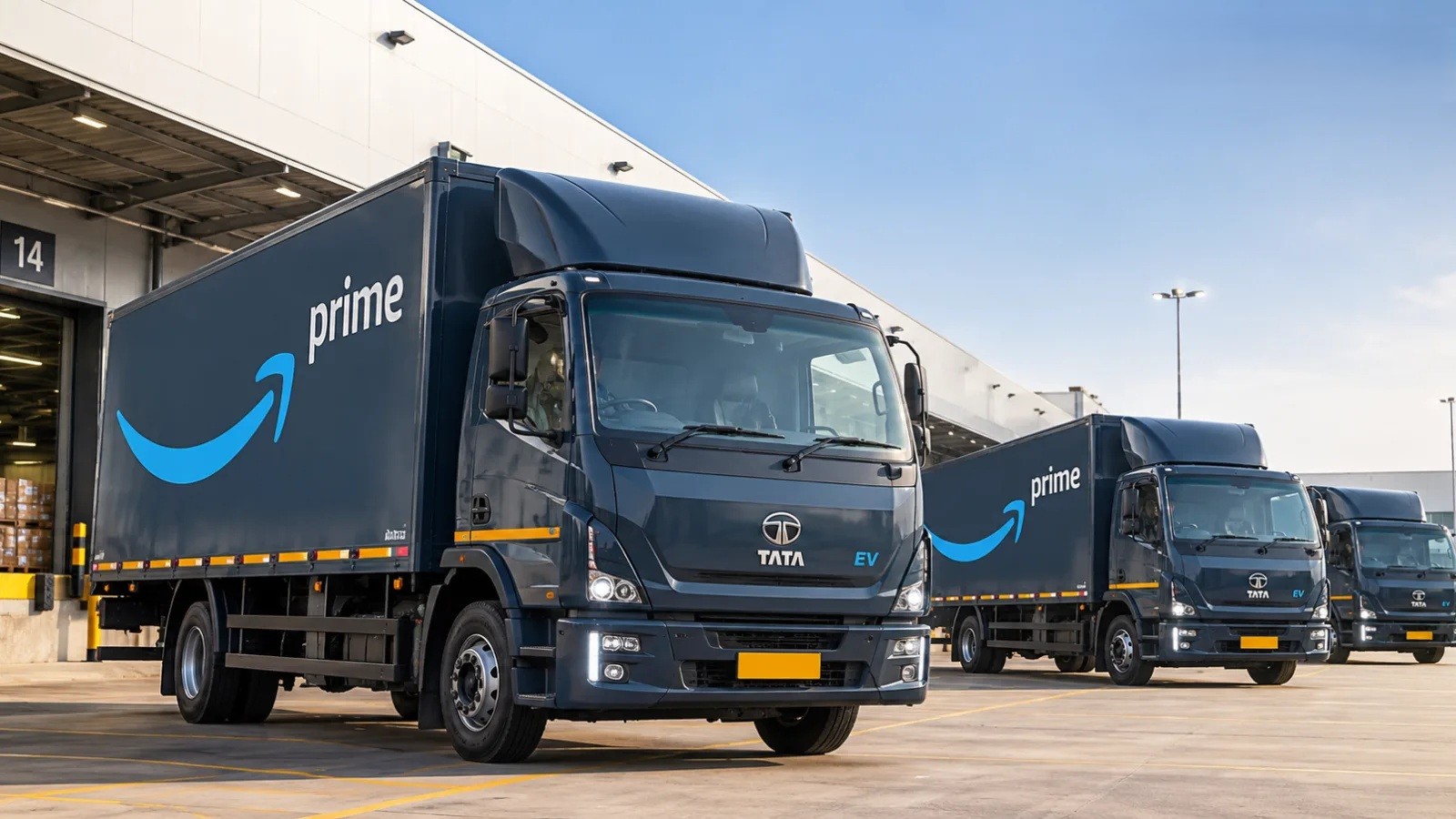
Amazon, Tata Motors Plan 3,000 Electric Trucks For India
The three-year rollout will expand fleet electrification beyond last-mile deliveries, with plans to extend operations to major freight corridors.
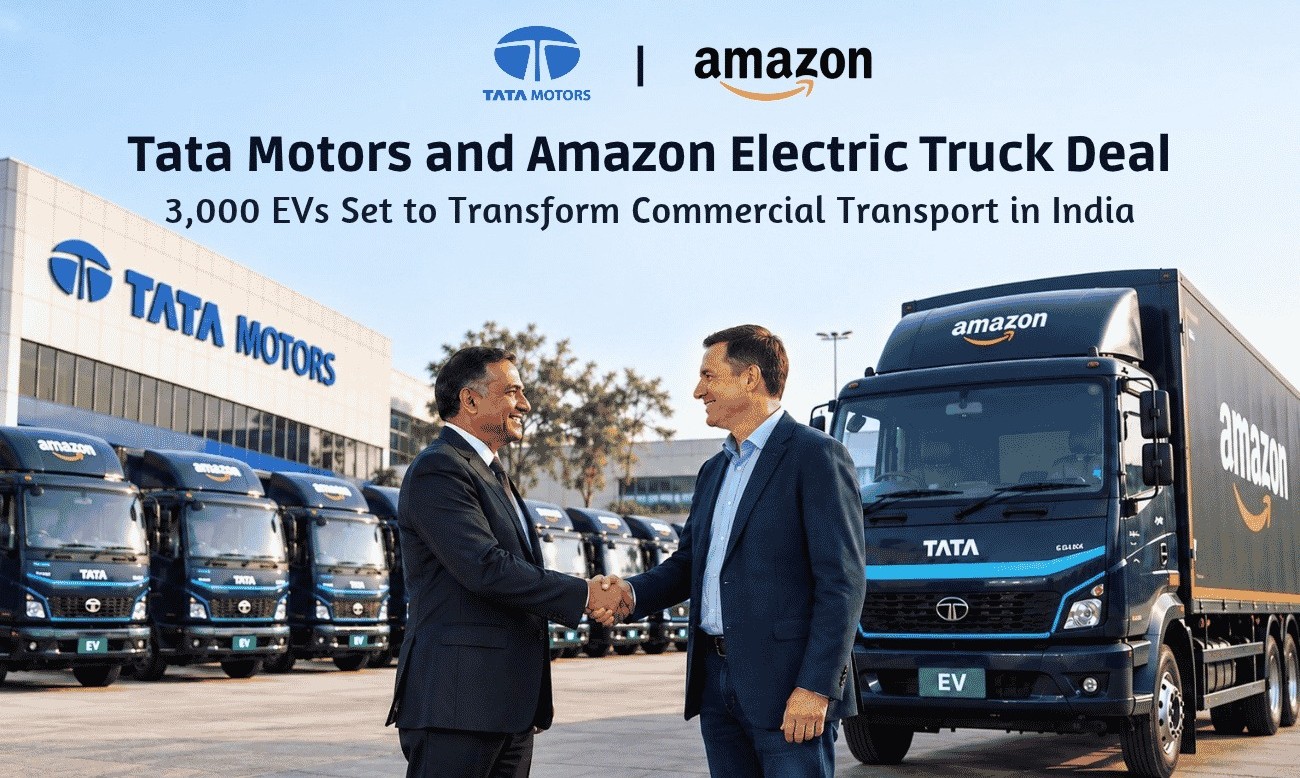
Amazon and Tata Motors will deploy 3,000 electric trucks across India over the next three years, extending the electrification of e-commerce logistics from last-mile deliveries to the movement of goods between cities and distribution facilities. The initiative comes as rising freight demand and pressure to reduce transport-related emissions push businesses to explore cleaner commercial mobility solutions. The first batch of trucks was flagged off in New Delhi on 27 October 2026 by Union Minister for Heavy Industries and Steel H D Kumaraswamy.
The deployment is being positioned as the largest electric-truck rollout announced by an e-commerce company in India, according to company statements reported by Business Standard.
Tata Motors will supply the vehicles, while Amazon’s carrier partners will own and operate them. The arrangement allows Amazon to expand the use of electric commercial vehicles through its logistics network without directly owning the entire fleet.
Freight Electrification Gains Momentum
The initial rollout will begin in Delhi during the festive season, when e-commerce shipments and retail logistics typically experience higher volumes. Light- and medium-duty electric trucks will transport consignments between facilities and support intra-city freight operations. The next phase is expected to extend to major national highways, including plans to electrify the 2,800-km Delhi-Bengaluru-Chennai freight corridor along National Highway 48. The route connects six major e-commerce regions across seven states, making it strategically important for long-distance supply chains. Charging infrastructure will be critical to the expansion.
The companies are working towards supporting the rollout with dedicated charging facilities, including hubs being developed with charging infrastructure provider Yahvi. The partnership reflects a wider shift in corporate fleet strategies as businesses seek to address emissions from freight transportation. Electric trucks can eliminate tailpipe emissions during operation, although their overall climate benefits depend partly on the electricity mix used for charging and the efficiency of vehicle operations.
Infrastructure And Costs Remain Key
The commercial viability of electric trucking will depend on vehicle acquisition costs, battery performance, charging availability, utilisation rates and maintenance expenses. For fleet operators, lower running and servicing costs over a vehicle’s lifetime may help offset higher upfront costs, but the economics vary by route, payload and charging requirements. Industry experts note that scaling electric freight requires more than vehicle deployment: reliable charging networks, predictable operating schedules and adequate vehicle utilisation are essential to making the transition financially sustainable.
Amazon said it already operates more than 15,000 electric vehicles across over 500 cities in India. The new programme extends its electrification efforts into commercial freight, a segment where infrastructure and operating requirements differ from those of smaller delivery vehicles. The initiative also supports Amazon’s global ambition to achieve net-zero carbon emissions by 2040. Its longer-term impact will depend on how quickly the fleet is deployed, the proportion of freight shifted to electric vehicles and the availability of charging infrastructure across key transport routes.
Recent Comments