Daimler Buses continues to rely on Europe for next-generation electric city bus
- Next-generation Mercedes-Benz eCitaro to be launched in 2028 and developed from the ground up as an electric bus for the first time
- Development led by Mannheim; production planned in Germany, France and the Czech Republic
- Till Oberwörder, CEO of Daimler Buses: “We are clearly committed to Germany and Europe as business locations: This is where we are developing and producing the next generation of our electric city bus. Europe has the expertise and the industrial base for the mobility of the future. The EU must create the right conditions to ensure that industrial value creation here remains competitive. To achieve this, we need simple and consistent rules across national borders, without exceptions. And we need them now, not in the next decade.”
- EU sets different CO₂ targets for each bus segment: Daimler Buses supports city bus requirements but calls for a reality check for coaches due to lack of charging infrastructure
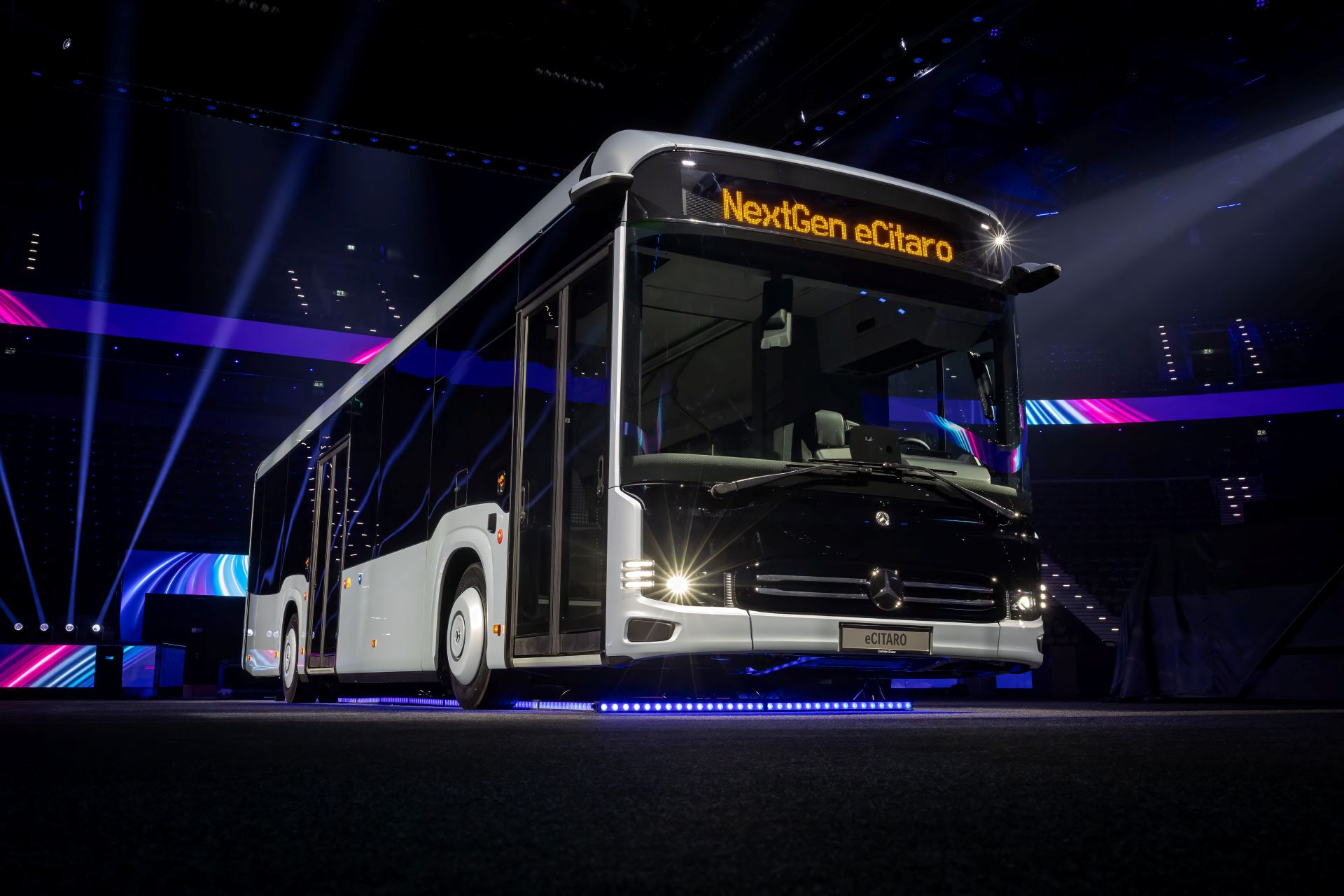
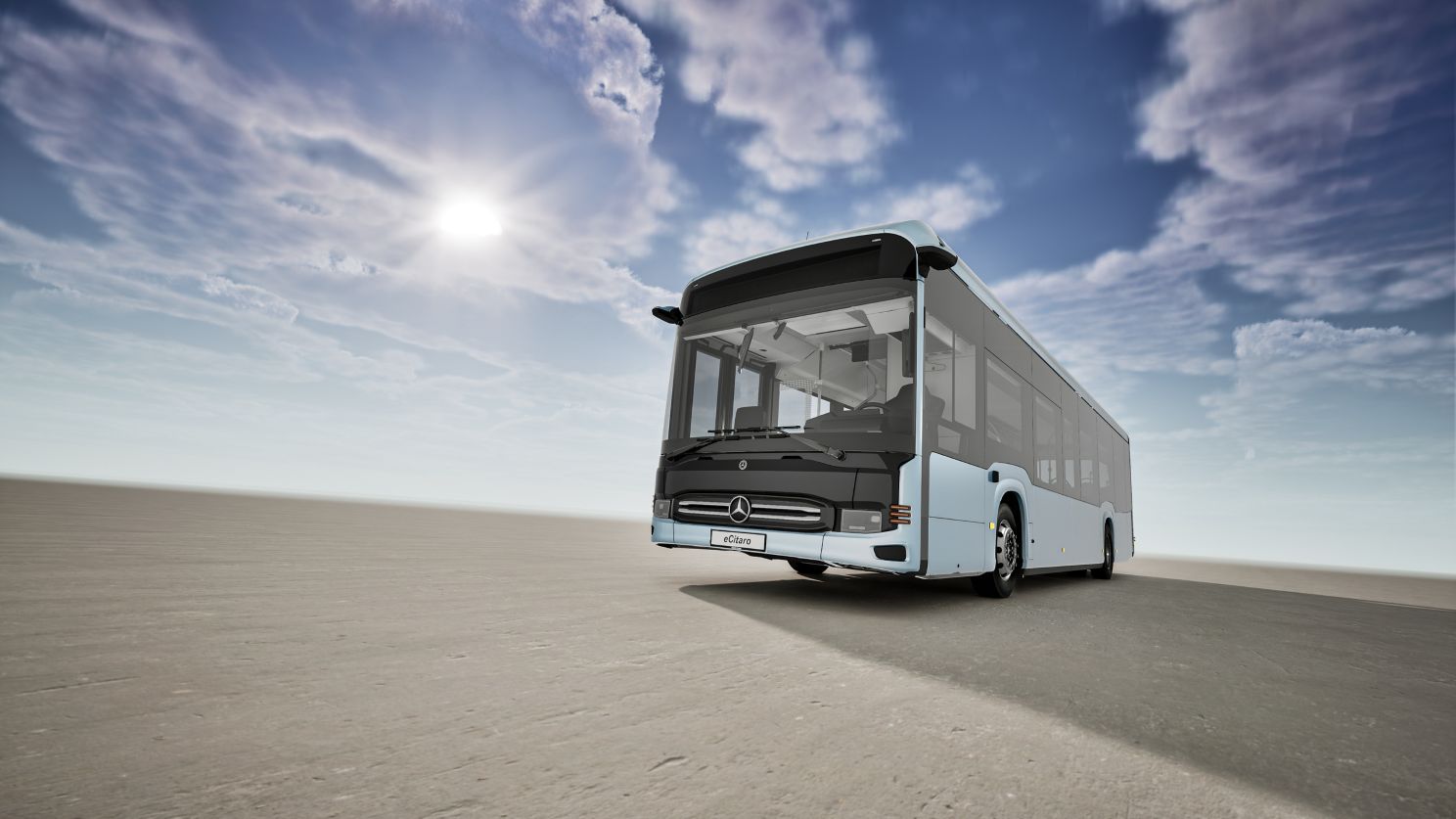
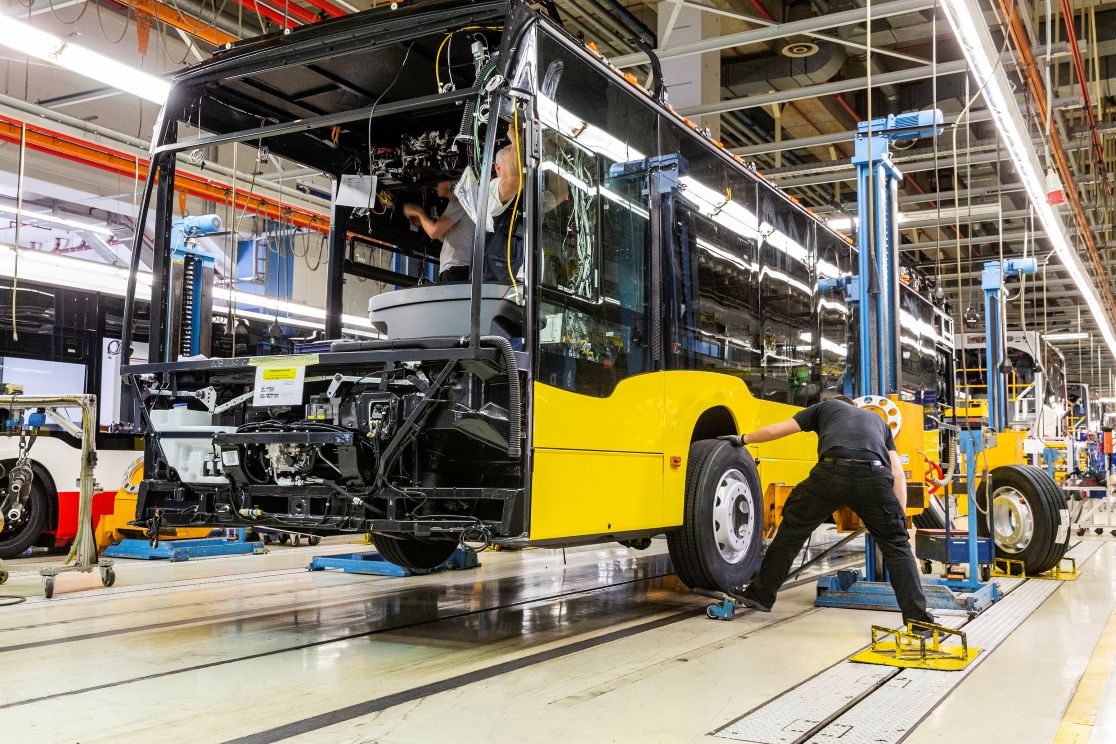
Daimler Buses continues to rely on Europe for battery-electric city buses. The manufacturer today presented a near-production prototype of the next generation Mercedes-Benz eCitaro. The vehicle is scheduled to be launched in Europe in 2028. Development is being led by Mannheim, with production planned in Germany, France and the Czech Republic, as with the current eCitaro. The new vehicle generation is part of the company’s electrification strategy: From 2030, Daimler Buses intends to offer only electrically powered city buses in its new-vehicle business in Europe. At the same time, the company is calling for a consistent competitive framework across Europe and faster expansion of public charging infrastructure. Daimler Buses presented the new vehicle generation and its positions on the political framework today at the “Daimler Buses eMobility Days” in Munich.
Till Oberwörder, CEO of Daimler Buses: “We are clearly committed to Germany and Europe as business locations: This is where we are developing and producing the next generation of our electric city bus. Europe has the expertise and the industrial base for the mobility of the future. The EU must create the right conditions to ensure that industrial value creation here remains competitive. To achieve this, we need simple and consistent rules across national borders, without exceptions. And we need them now, not in the next decade.”
Daimler Buses supports the European Union’s plans to strengthen industrial value creation in Europe through the so-called “Industrial Accelerator Act.” The aim is to increase demand for low-CO₂ products manufactured in Europe. From the company’s perspective, however, the specific design of the legislation will be crucial. Daimler Buses takes a critical view of proposals that would impose additional, complex requirements on manufacturers. In addition, a lengthy legislative process must not create uncertainty or lead member states to pursue their own approaches.
Electric buses are shaping the city bus market – Daimler Buses calls for funding to continue
Electric drives have already become widely established in the European city bus market: According to analyses by Daimler Buses, two out of three city buses sold in Europe in 2025 were electrically powered. Daimler Buses has played a major role in shaping this development with the Mercedes-Benz eCitaro and has delivered more than 4,600 vehicles to customers across Europe to date. Since its market launch in 2018, the company has continuously developed the model further.
Targeted national funding programs have played a key role in supporting the transition to electric city buses to date. Daimler Buses therefore takes a very critical view of the cuts to electric bus funding being discussed in Germany for 2027 and is calling for funding to continue at its current level.
Next-generation electric city bus: electric from the ground up
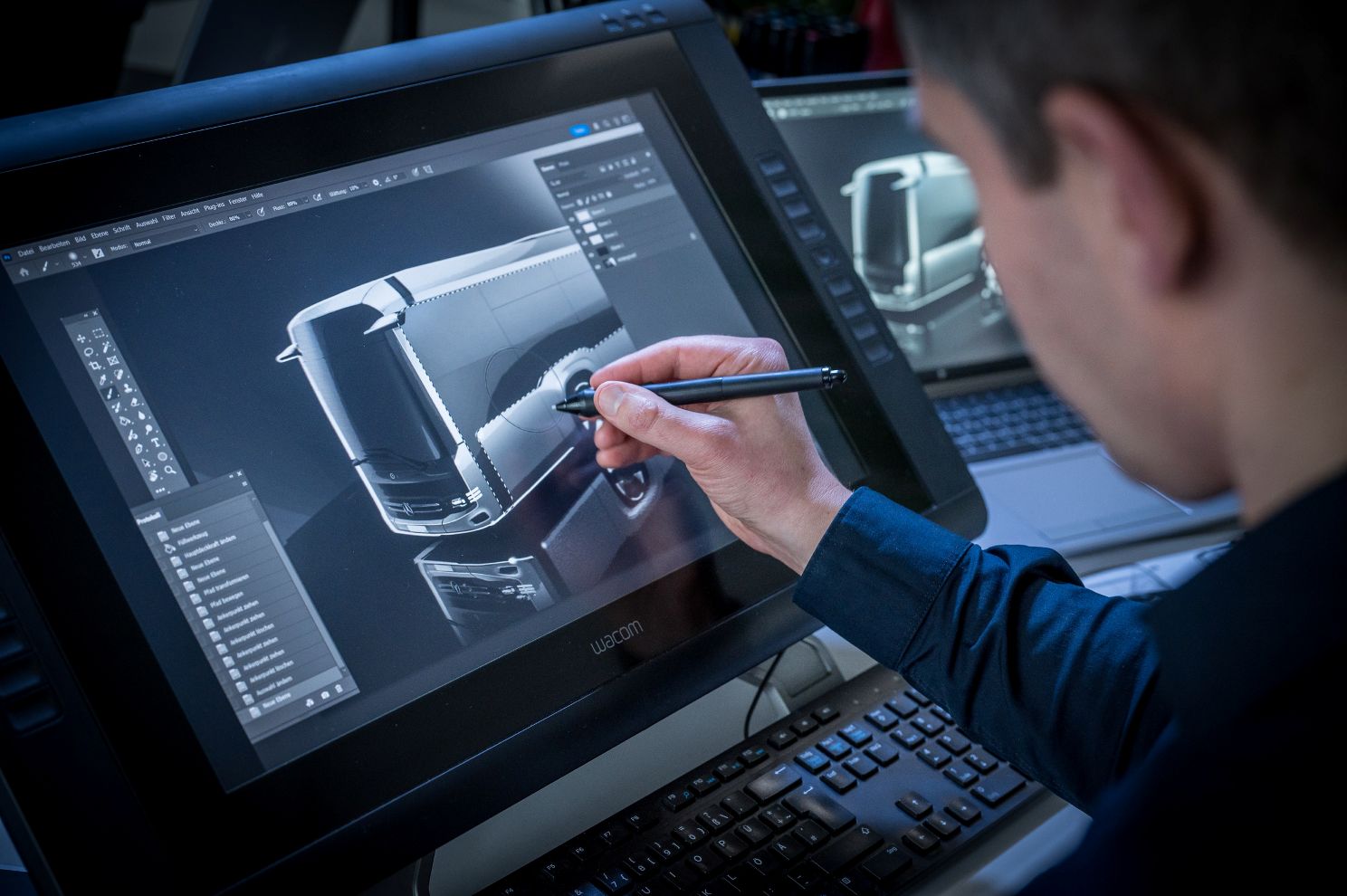
While the current eCitaro is based on the platform of the conventionally powered Citaro, Daimler Buses is developing the next generation from the ground up as an electric bus for the first time. The manufacturer is using lithium iron phosphate (LFP) cell technology. Depending on vehicle length and operating profile, solo buses can be equipped with six to twelve LFP battery packs and articulated buses with eight to 14, distributed between the underbody and the roof.
The next-generation eCitaro also features two drive concepts: The low-floor version uses electric motors positioned close to the wheels, enabling a completely level passenger compartment all the way to the rear and allowing the articulated bus to operate with just one driven axle. The low-entry version uses a central motor that enables speeds of up to 100 km/h and therefore also allows the vehicle to be used on intercity routes. This enables Daimler Buses to tailor the drive system specifically to the respective vehicle variant and its operating profile. Designing the vehicle consistently around the electric drive also reduces curb weight, by around 750 kilograms in the case of the articulated bus, for example. A new electronic architecture also enables over-the-air updates and the subsequent activation of optional functions.
Electrification of intercity buses and coaches depends on public charging infrastructure
Daimler Buses is pursuing an electrification strategy across all bus segments. Following the electrically powered eCitaro city bus, the company presented the Mercedes-Benz eIntouro, its first battery-electric intercity bus with a range of up to 500 kilometers, at the end of 2025. The first customer delivery is scheduled to take place later this month. In addition to conventional intercity routes, the vehicle can also be used for trips, shuttle services, excursions or school transportation. Daimler Buses also plans to have battery-electric coaches in its portfolio by the end of the decade. Fuel-cell coaches are then set to enter series production in a subsequent step.
However, charging infrastructure requirements differ significantly depending on the area of application: City bus operators can install charging infrastructure at their depots, ensuring predictable charging breaks. For intercity buses and coaches, by contrast, public charging points along their respective routes are critical. According to industry association ACEA, around 35,000 charging points for heavy-duty vehicles will be needed along Europe’s main transport corridors by 2030, as well as more than 14,000 additional charging points for buses. These are particularly necessary near tourist destinations, as coaches and intercity buses regularly travel to destinations away from major highway corridors.
Different CO₂ targets for city buses and coaches: Daimler Buses calls for a reality check
The EU requirement stipulates that, from 2030, 90 percent of city buses newly sold, registered or put into service in the European Union must be CO₂-neutral. Daimler Buses expressly supports this target given the advanced electrification of the city bus market. The company takes a different view of the situation for intercity buses and coaches. Here, CO₂ emissions are to be reduced by 43 percent from 2030 compared with the relevant reference value (2025/2026). For this target to be achievable, the EU and its member states would have to significantly accelerate the expansion of public charging infrastructure and enable the vehicles to be operated economically. From today’s perspective, however, it is not foreseeable that this will happen in time. The rollout of the necessary infrastructure is at least three years behind schedule. Daimler Buses is therefore calling for the upcoming review of the CO₂ regulations to be linked to the actual expansion of the charging infrastructure and for the target year for intercity buses and coaches to be postponed from 2030 to 2033.
Till Oberwörder, CEO of Daimler Buses: “We support ambitious CO₂e targets in Europe. What matters is that the framework conditions are in place to support them. Our vehicles will be available in time, but the necessary public charging infrastructure most likely will not. Without it, our customers cannot operate the vehicles economically. Building this infrastructure is not the responsibility of vehicle manufacturers. Anyone setting targets must also create the conditions needed to make them achievable. Otherwise, the transformation will become a competitive disadvantage for European industry.”
Nevertheless, Daimler Buses intends to contribute to further advancing the development of public charging infrastructure for electric buses. The aim is not to take responsibility for rolling out public charging infrastructure on a broad scale, but rather to provide targeted impetus. Through its subsidiary Daimler Buses Solutions, the company intends to build and operate its own public charging stations at key transport hubs for intercity buses and coaches. Initial projects in Hamburg, Cologne and Munich are already being implemented.
E-infrastructure from a single source
Daimler Buses Solutions GmbH is a wholly owned subsidiary of Daimler Buses and was established in 2023. The company specializes in consulting, planning, building and operating electric mobility infrastructure and also works on infrastructure solutions for other alternative drive technologies, such as hydrogen.
About Daimler Buses
Daimler Buses, a segment of Daimler Truck, is one of the world’s leading bus manufacturers and, with numerous national subsidiaries, is responsible for the global activities of the Mercedes-Benz, Setra, Omniplus and BusStore bus and service brands. The Daimler Buses product range extends from coaches, intercity buses, city buses and special-purpose buses to bus chassis. In addition to producing and selling new buses, Daimler Buses has a global service network and offers an extensive range of vehicle-related services, including the sale of used buses.
Daimler Buses’ locations include Daimler Buses GmbH with numerous subsidiaries in Europe, Daimler Buses Latin America in Brazil, Daimler Buses Mexico, Daimler Coaches North America, and the bus business of Mercedes-Benz Türk A.Ş. in Türkiye.
Daimler Buses relies on a production network in which its two German plants in Mannheim and Neu-Ulm play central roles: The Mannheim plant is the center of competence for electrically powered city buses, while the Neu-Ulm plant is the center of competence for coaches with all types of drive systems and the only location that produces Setra coaches. The production network’s other plants are located in Ligny-en-Barrois, France; Sámano, Spain; and Hoşdere, Türkiye.
With its production sites in Mannheim and Neu-Ulm, Daimler Buses is the only manufacturer of buses over 8 metric tons that produces city buses, intercity buses and coaches in Germany.

25DT009_007
26DT187_001
26DT187_018
Recent Comments