
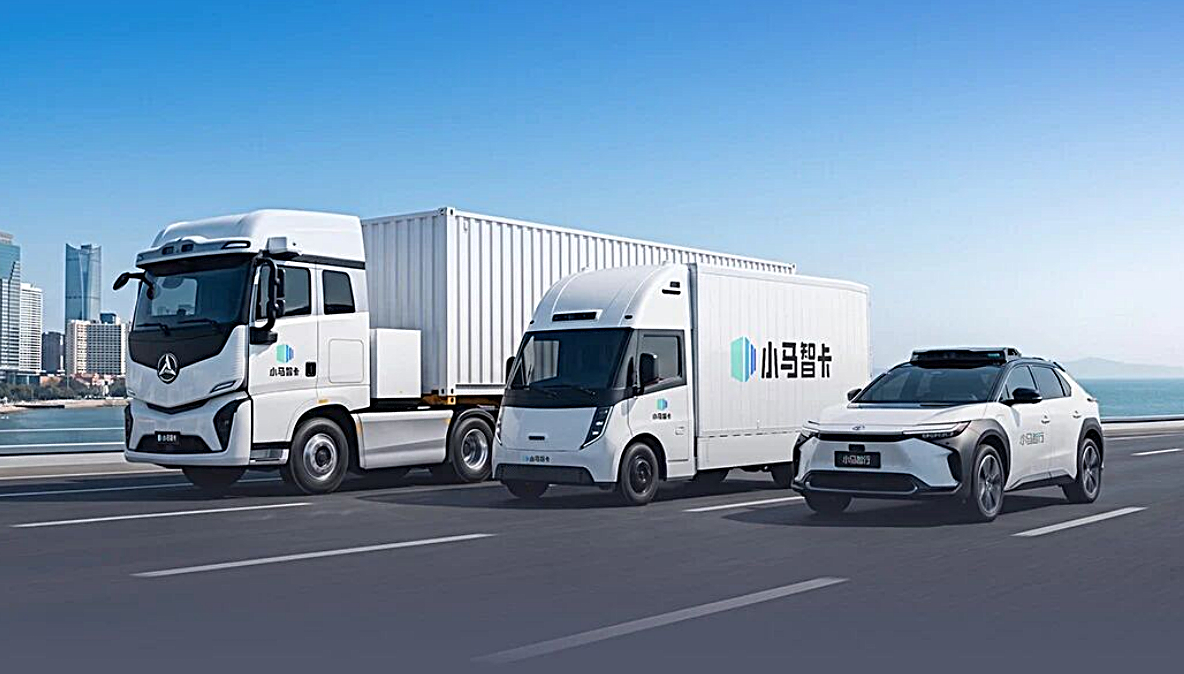

Pony.ai Plans to Introduce Autonomous Trucks in Europe
After conducting initial tests of its autonomous taxis in Europe, Pony.ai now plans to introduce autonomous trucks (Robotrucks), i.e. self-driving electric trucks, in Europe as well. Company officials say they have already begun discussions with various European ports and governments about implementing pilot projects of this kind.
Following the initial tests of its autonomous taxis in Europe, Pony.ai also plans to launch its autonomous trucks in Europe.
Recently, Pony.ai and GAC chose IAA Transportation in Hanover, Germany, for the global debut of the new truck, which was unveiled on September 14.
In cooperation with GAC, the Chinese company has developed the fourth generation of an all-electric heavy-duty truck equipped with Pony.ai’s Level 4 autonomous driving software.
The truck is based on the GAC T9 electric truck and Pony.ai’s proprietary global AI model. The two companies, which are partners in the development of the software and components, announced that the truck is scheduled to enter mass production for the first time later this year.
Focus on Reducing Transportation Costs
Production costs for these vehicles are lower in China. During its announcement at the IAA exhibition in September, Pony.ai stated that the cost of components for the autonomous driving hardware system had fallen by 70% compared with the previous generation. The company claims that the cost per ton-kilometer for freight carriers is approximately 30% lower than that of conventional heavy-duty trucks. Neither figure has yet been independently verified.
The experience gained, along with the initial mass production in the autonomous taxi sector, is helping the company reduce the cost of autonomous trucks.
The T9 uses the same central computer as Pony.ai’s seventh-generation autonomous taxis.
The company also announced that the truck uses:
-
9 laser-based LiDAR units.
-
3 radar sensors.
-
13 cameras to map the surrounding environment.
GAC provides an electronically controlled chassis designed entirely around a Drive-by-Wire system.
The steering, braking, communications, power supply, computer, and sensor systems all feature functional redundancy, meaning they can continue operating even if some individual components fail.
However, there are limits to how much of this development experience can be applied to heavy-duty trucks. Their size, weight, and longer braking distances require additional modifications. Therefore, it is likely to be particularly important for Pony.ai to obtain the necessary approvals for road-driving tests in China more quickly than is currently possible in the United States and Europe.
Reuters recently reported that several hundred Level 4 trucks are currently operating on initial routes in China, some without drivers and others with safety drivers. A few weeks ago, the company also announced plans to deploy between 500 and 1,000 heavy-duty trucks in China over a period of two to three years as part of the launch of its fourth-generation platform.
Recent Comments